The Beauty of Faces

poet
At my home in Connecticut I am able to get out into the world and see possibility despite quarantines and shutdowns. We live at the top of a hill, and one of my routine walks is up and down (about 1/2 mile both ways). A bigger loop brings me around the neighborhood, about 2 miles. We also have a semi-circle driveway with slopes and a sanctuary of laurels, oaks, and a few half-way hidden blueberry bushes. Twenty minutes, about 15 times around, is a mile’s worth of walking, enough time to circle and see what usually goes unnoticed. Repetition and wonder.
I found this little guy on a hard-to-figure out chestnut yearling. I prefer the worm’s philosophy about walking. On my own, I’m just walking in circles.

Check out Brainwaves Video Anthology on You Tube. Take advantage of the filmmaker Bob Greenberg’s hard work, and browse a diverse anthology of videos featuring writers and thinkers from across the spectrum of literature and culture.
the ones who promised . . .
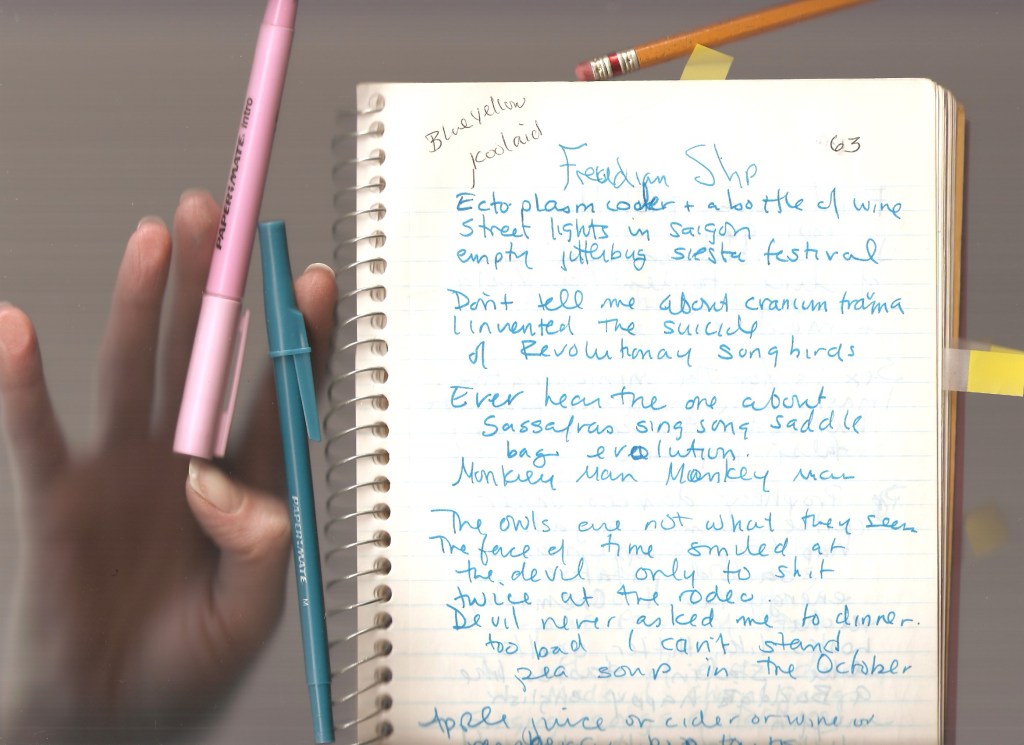
Also from the archives, 1992.
Blue Moon Diner
He might have been blind.
In my hourglass
recollection, I don’t believe
he ever looked at me
with his eyes–spacious,
window-like; each blink
the metamorphosis of a streetlight
from red to green
from grey to gray.
Aged cacti prickles
crowned his head; roadmapped
baldness charted the constellations
of his travels. To hear
restaurant monologues
in my novice ears was to see
wisdom printed on a napkin.
He said I looked New Englander, like himself.
I heard him say sheltered,
smiling. Professor
of all that is reachable, witness
of revolution, student
of places where clouds paint
shadows on the landscape,
his slight cricket body
carried mountains.
I saw myself journeying
through time tattered windows;
I saw the vast-heavy earth
deflate to a school child’s globe
filled with places I will go to
when I know the color of every star.
I sipped coffee, sugarless.
I did not ask his name.
I did not think
to ask his name.
Wanting to be seeded
into the perennial world, the poet
seeks the counsel of tiger lilies.
from Mouthbrooders

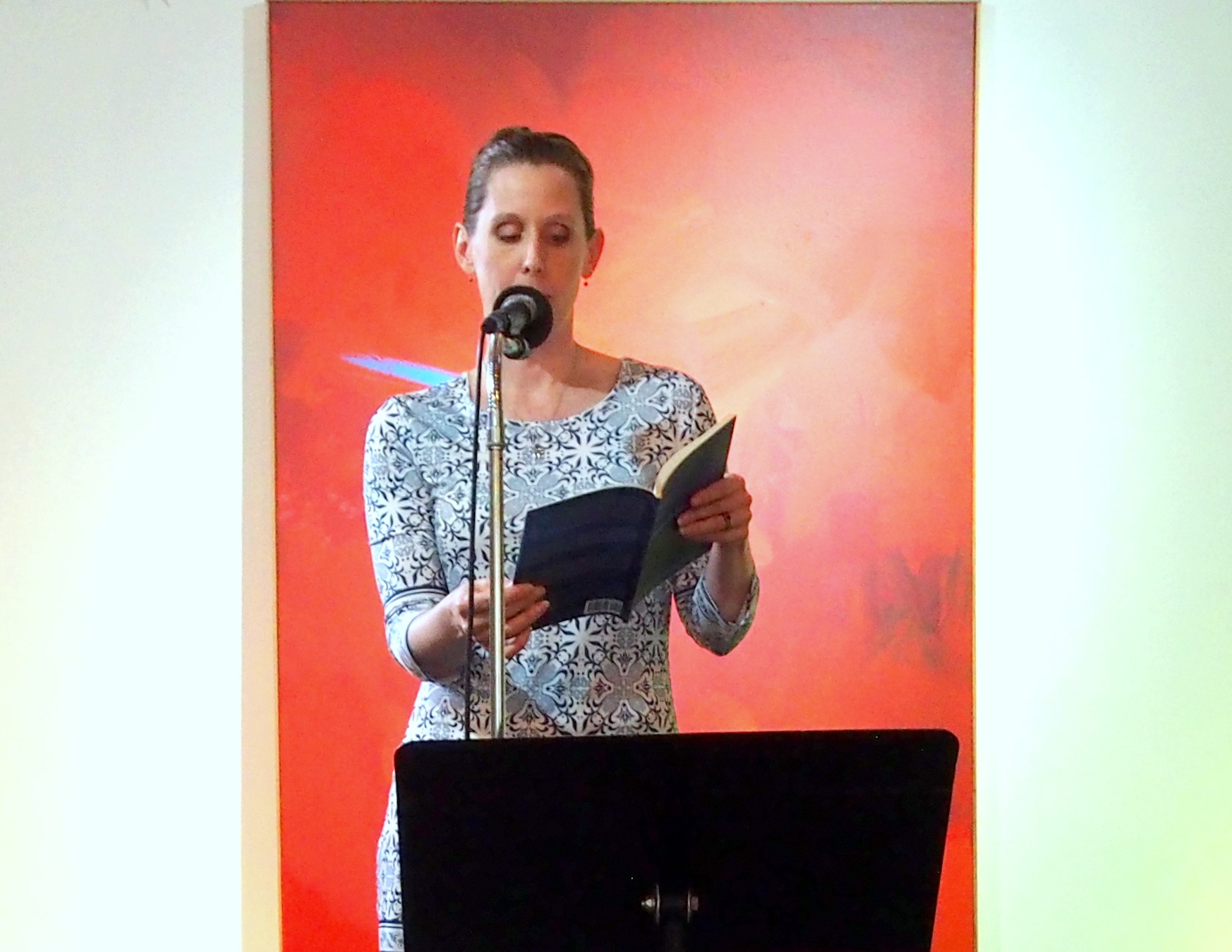
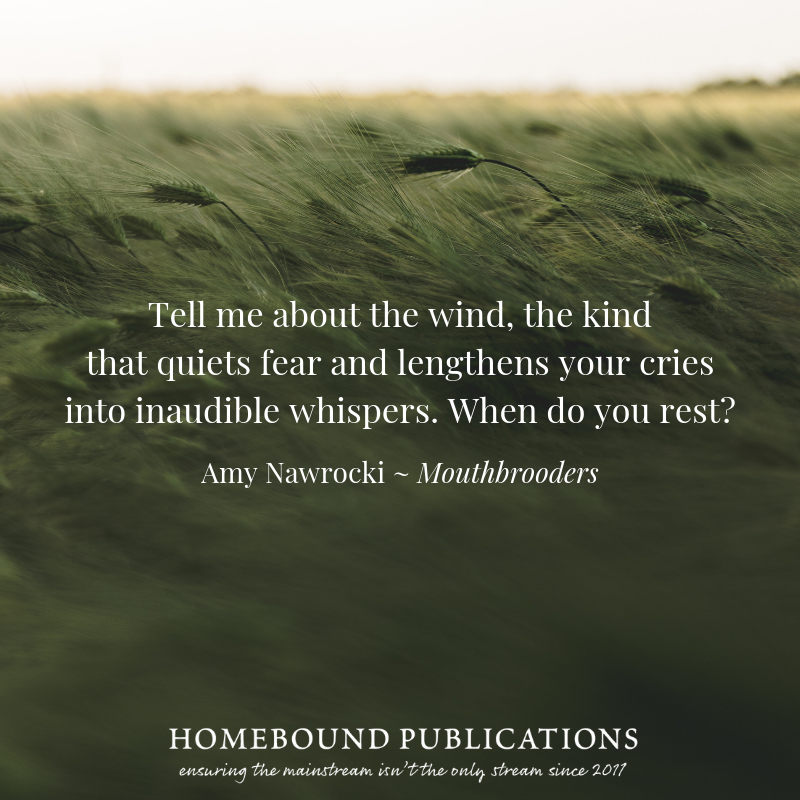
My latest collection, Mouthbrooders, is set for an official release on June 10. Order now from Homebound Publications and use INDIESTRONG when you check out to receive 20% off on your entire order.
During six months of vocal cord paralysis, author and professor Amy Nawrocki turned to the written word and fell in love with language again. The result of this exploration is her stunning collection Mouthbrooders, full of sounds and their echoes—ravens screeching, eggs cracking, and acorns falling. As Nawrocki struggles to find her own voice again, she midwives the voices of catastrophe, of memory, and of the small miracles of everyday life.
Mouthbrooders, published by Homebound Publications
“With language that freshens and lends intrigue to the familiar, Amy Nawrocki makes a sacrament of life’s ordinary rituals from gardening to shoveling snow to waiting at the DMV. Whether it’s a walk in the woods, a meal, or the travails of illness, readers are in the moment with her. I delight in worlds with ‘lollipops that suck away loneliness,’ where a woman is ‘foraging for her lover’s shoulder,’ and there’s a ‘taxidermy of goodbyes.’ I want to linger and read again.”
–David K. Leff, author of The Breach and Terranexus
Tears come down wet, whether in fear, grief, delight, or gratitude.
Read my latest essay, “Failing Feet and Finger Lakes” in the autumn issue of Fired Up! Creative Expression for Challenging Times.
My poem, “Lucifer Falls, New York,” was also inspired by the gorges and trailheads near Cayuga Lake. What’s the connection between poetry and prose? Read more about the lines between them in my essay from Re-Imagining.
Like war planes, a crowd
of raptors scull through the blank
and cloudless sky. One
after another, they stream
over the open paddock
of midsummer green, advance
toward a still and speechless
line of trees. Their portents
reach the forest’s door; needles
of pine brace between hard clay
and treachery. The bone black jaw
of a red-bellied snake ruins
a toad’s last chance for escape.
He is in the middle of it now,
like the fawn whose femur lay
furloughed in the gorge,
trespassing on the slick ink
of river-smoothed black rocks.
“Lucifer Falls, New York” appears in Reconnaissance, published by Homebound Publications. This collection and my memoir The Comet’s Tail are both available wherever books are sold, especially at Homebound’s online store. Support Indie Presses and shop Small Business Saturday.

About this time every year, when the leaves begin to fall and the soil is perpetually wet and cushiony, I begin to long, strangely enough, for comfortable measurements. The three deer who’ve visited our lawn came back this second morning, so that’s a start. The tiny, unrecognizable bird (sparrow? finch?) fluttered in and out of the green down of a dense cedar pine. She disappeared into the brush, gone long enough for me to miss her, then darted back into sight without a “word to tell me who [she] was.”
Scanning the autumn woods and contemplating birds and future snow, I spot a recently constructed woodpile and recall Robert Frost’s poem “The Wood-pile.” Like my fluttering finch and grazing deer, I’d like to be “someone who [lives] in turning to fresh tasks” enough to forget the handiwork raking leaves, snapping photos, tracing straight lines. Enough to read the landscape with the mind to “go on farther.”
This close-read of the poem appeared in the winter 2007-2008 issue of Umbrella: A Journal of Kindred Poetry and Prose.

In the often overlooked poem “The Wood-Pile,” Robert Frost explores the human life cycle, particularly the process of aging. The speaker is in a middle stage of life, about to embark on the winter of old age, which corresponds to the setting of the poem. Because the speaker is “out walking” in this cold setting, “far from home,” he is transplanted and in an uncomfortable environment. The reader can surmise that a transformation is likely to take place here. The first scene’s elements, “hard snow,” the view of trees “all in lines” that were “too much alike to mark by name or place” give a bleak and uncertain sense to the scene. In this manner, nature is discomforting. It is only the “hard snow” that keeps him there, as the culmination of his life work in old age will give purpose.
He encounters a bird; the bird leads him to a woodpile bound by a tree and a stake. We can read that the bird’s literal purpose is to show dissimilarity between man and bird and the misunderstanding that occurs between them, largely due to the bird’s innocence or naiveté. Bird and narrator are separated literally by a tree: “He was careful/To put a tree between us when he lighted.” Metaphorically, they are separated by age and wisdom. The bird represents a youthful figure, being “small” and foolish, taking “everything said as personal to himself,” as one unsophisticated in the ways of the world might do.
Similarly, like a young person, the bird mistakenly thinks the speaker is after his tail feather. The white feather, in contrast to winter’s white, could be taken as a symbol of innocence. Like the trees that are “too much alike to mark or name a place by,” the bird gives “no word to tell me who he was.” Both the tree and bird’s identities are lost in anonymity. Before the speaker is able to forget the bird for the pile, he must let the bird lead him there. These lines serve not only as transitions, but as thematic devices. Perhaps in his own younger days, he might have gone the way of the bird, but now does not wish the bird “good-night.”
With his description of the woodpile, the speaker contrasts earlier images by stating “not another like it could I see.” Unlike the trees and bird, the decaying woodpile is unique. He also moves from living images to the “dead” woodpile, and here the poem takes a dramatic turn. Frost states, “It was older sure than this year’s cutting,” telling us that the woodpile represents the declining years of life. A pristine quality prevails near the pile as “no runner tracks…looped near it.” And: “The wood was gray and bark warping off it/And the pile somewhat sunken.” Such lines evoke an aging man, his hair grey and his head balding, his body and bones sloped drooping. The vine, like a man’s work, wraps or consumes his life, a theme that echoes in the last lines. The growing tree and falling stake contrast, and represent what holds the aging man—his living familial ties and his cane.
At the emotional fulcrum of the poem, the poet looks at what has come before—the bird, the pile—and works toward a contemplative resolution. The final lines are the antithesis of what has come before, showing us there is purpose. On the one hand, the poet asks what kind of person could leave such art idle, while on the other asserts that art has a function of its own. In aging, we often think our usefulness will decay and we will be abandoned by “someone who lived in turning fresh tasks.” But Frost does not leave the pile “far from a useful fireplace” without final value. Though abandoned, it “warms the frozen swamp.” In a remarkable reversal of common thought, Frost conjectures that it may be in the winter of life when we find fulfillment. He certainly concludes that work and art have persistent, smoldering meaning, even beyond a living end.
 Amy Nawrocki