Five lines

Years ago, when I fell into what is sometimes referred to as “writer’s block,” I found an outlet in haiku, tanka, cinquain, and other short form poems. I made a pledge to myself to write three lines a day, sometimes five. I was able to keep it up for over a year, until the file folder, neatly titled “haiku a day” was inadvertently sucked into the cyber trash.

I’ve been in a little bit of a rut lately, so here is day 1 of the new “five lines a day” folder.

 
no mind for words, no
sink hole to burrow or free
unforgivable limbs
from pen caps whose plastic scratches
leave no trace of helpful blood

poem in your pocket

Just around the corner

With temperatures dipping, snow falling or rain threatening, I have thoughts of spring and dreams of robins and tortoises, bees and rainbows. Please, “Tell me what time the weaver sleeps . . . ”

Here is Emily Dickinson
Bring me the sunset in a cup,
Reckon the morning’s flagons up
And say how many Dew,
Tell me how far the morning leaps—
Tell me what time the weaver sleeps
Who spun the breadth of blue!

Write me how many notes there be
In the new Robin’s ecstasy
Among astonished boughs—
How many trips the Tortoise makes—
How many cups the Bee partakes,
The Debauchee of Dews!

Also, who laid the Rainbow’s piers,
Also, who leads the docile spheres
By withes of supple blue?
Whose fingers string the stalactite—
Who counts the wampum of the night
To see that none is due?

Who built this little Alban House
And shut the windows down so close
My spirit cannot see?
Who’ll let me out some gala day
With implements to fly away,
Passing Pomposity?

DSC_0529

Winter Work

Winter Work


Winter Work

Snow piles thick
like skin of lost pachyderms,
the ones filed into burnt
tomes of obsolete
glossaries. Shovel in hand
I plow with fortitude
into bellows of white,
a knee’s worth, sugary
and full of honeycombs.
Slopes and muscles meet
and I scoop into wicked
luminosity, slay lathered
pathways and toss
the blizzard into
the mammoth’s toothed void.

Until Nomading Ends

Giving up the shell can be hard, but so worth it. After nomading, we find home.

Abandonment

Naked, the crab forgets
his hermit ways, creeping
in the oyster underworld,
brushing against minnow fins
and ugly red claws, until
nomading ends, and a home,
spiraled in calcium, appears.

A watery cosmos of green
awaits the refugee shell;
the sea is populated
by old dwellings, discarded
by molting crustaceans, spit out
for sand diggers and souvenir
hunters, strangled by a scarf
of seaweed or broken
with gravity’s axe, swung
by the long hand of the moon.
From Nomad’s End, 2010 Finishing Line Press


OLYMPUS DIGITAL CAMERA
Souvenir hunter
lady slippers
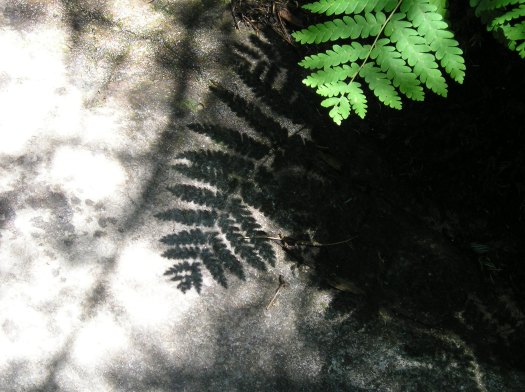
Forest Dweller
OLYMPUS DIGITAL CAMERA
Copper Beech
OLYMPUS DIGITAL CAMERA
Shadow home
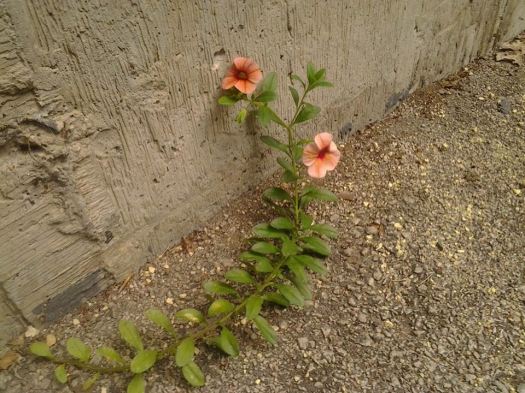
sidewalk petunias
Thrive
KONICA MINOLTA DIGITAL CAMERA
Home
nawrocki cov
Buy me!

My Better Self


My good friend Mary Fletcher (in cahoots  with my secret-keeping husband Eric) painted my portrait. It was a Christmas surprise, but also a wonderful celebration of the end of the year, the beginning of the new year, and especially our friendships and love of art. It’s also a never ending birthday gift. As strange as it is to see myself in paint, it’s been wonderful to reflect on what it means to be seen through other’s eyes and to see Mary’s generosity come through in her work.


The painting is richly textured, warm and cool, delicate and bold, subtle and bright. Mary painted the image from the author photo I’ve been using, but chose a completely unique color palette, which I love. The painting  takes on a life of her own, one that I’m honored and humbled to be connected to. Thank you Mary.

The True Weight

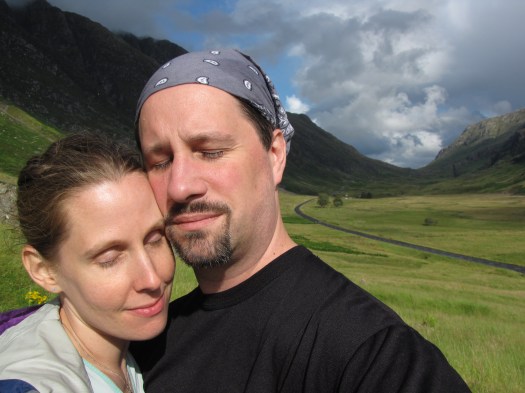
West Highland Way, August 2011; a little tough, a little glorious


eric in pain

The True Weight

We make a list of all our favorite moments—
best hikes, finest meals— skipping
over the hard parts—when boots filled
with muck and rain froze our hands
and spun through the plastic
of our water-proof coats, each cursed step
you suffered through pain without ever
surrendering to sighs. Cataloging
the singular bluebell doesn’t really

tell the whole story. The tiny tear-shaped
flower pressed between “A Dream” and
“Ode to the Memory of Mrs. Oswald”
in the pages of Robert Burns
does not relate the true heft of that volume—
the pages, browned and frayed, turn easily
one at a time but bound together
they hold the true weight of the poet’s words.

So too, yellow broom and wood sorrel
decorating the ascent through Glen Nevis
or the heather spilling lavender toward
the modest peak of Bien Inverveigh
can never be summarized
in one sprig of tiny rainbow blooms.

From Four Blue Eggs, Homebound Publications, 2014

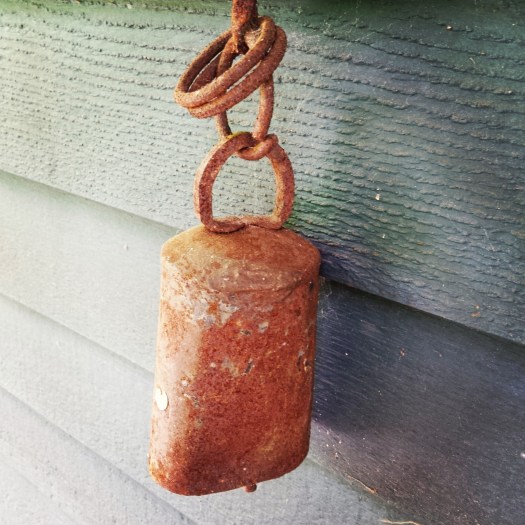
Rusting

IMG_20150521_135555

From Four Blue Eggs

Please add Homebound Publications to your list of stops for holiday shopping. Winter Sale–25% off! Finish 2015 off with a book in your lap.

How to Say Goodbye

The eighth month buzzes
through lichen days, dry
and hot; mud pools sweat
from the long-ago decadence
of rain and frogs plop like ice cubes
into this imagined summer drink.

Badges of mica shimmer
in the sun-bathing rocks
and the thirsty earth sends
missionaries—brown mosses
crunching underfoot; leaves
absorbing the prism, reflecting
the short, electromagnetic
waves we have come to call
green, and grasses turning
now, slightly away as if
to say, enough, spreading
chlorophyll cylinders
to catch a dreamed of
rain drop. Even crickets
sing with parched voices;
their constancy interrupted
by an intermittent hiccup;
small bow legs pause to rest
and then return to syncopation.

It’s too hot for human flesh:
our scales have fallen off,
and our naked, unprotected cells
do not photosynthesize.
We are much like sticks
fallen from hardy oaks,
vulnerable to the breakage
of heat. But there are promises, too
here in this parched world:
of shelter, protection, the sip
of a cool night, the awe of witnessing
something of change; promises
of relief if only we hang on until
our reddest moment, after we’ve turned
everything to sugar and can let go
knowing winter’s white can hold us.

Monet, Dostoyevsky, and some Lousiana Cypresses

Thanks to Timothy Quirk for recording my reading of “Giverny” for Nutmeg Chatter.


With Voices of Poetry in August, I read “The man sitting next to me is reading The Idiot.”  You can find this and “Giverny” in Reconnaissance.


Thanks to James Novoa for filming me at Housatonic Community College for my Writers in the Classroom presentation. I’m reading “Aboriculture” which you can find in Four Blue Eggs.

Finding Your Inner Alice

In honor of the 150th anniversary of Lewis Carroll’s publication of Alice in Wonderland, the Hamden Public Library has sponsored a number of events this month, including a two-part writing workshop: Finding Your Inner Alice. I am happy to be participating with the 15 other writers in the workshop. Last week we brainstormed and discussed our personal connections to Alice and Carroll’s work.

By the end our our discussion, the group realized that many of us had negative impressions of Alice and her adventures in Wonderland. From my initial thoughts last week, I put together this “second draft.”

“Shut up like a telescope”

Finding My Inner Alice, Rough Draft, prose memory.

I come to Alice from a tree branch, from a separate limb. Maybe I’m the Cheshire Cat, watching myself watch her. I have no immediately accessible memory of time or place. No matter. I see from my pocket watch that I’ve arrived too late. She’s already gone down, and only by looking back—or looking through—or catching my reflection in my own looking glass—does she manifest.

My mother read to us often, and I recall, impressionistically, other books: their muted green covers, gold edged pages and pen-and-ink drawings. This is how I can render Toad and Rat and Badger in my mind from Wind in the Willows. I can still touch those pages.

Though I can’t pinpoint how I came to know her, it’s not hard to picture Alice, her blue dress and white pinafore painted like so many others in the Technicolor of Disney. But whether her image is a piece from a specific moment or a combination of moments, I don’t know for sure.

1book4

But it seems that my memory of Alice begins on page 8. I imagine that I’ve seen this drawing before, and that the first time I saw it I felt something. The image of long-necked Alice, stretched like silly putty and uncomfortably large, frightens me even now. It conjures in my mind a sense memory, something tactile, as if I can feel the vertebrae in my own neck separate. But unlike the thrill of seeing each inch of your life penciled on a hallway wall as you grow and age, I see Alice’s elastic neck as strangulation, instead of release. The key I need is out of reach.

Instead of watching my feet disappear underneath me, I watch a body in torment, and just for good measure the Queen of Hearts has come along to say with all the echo of childhood discomfort: “Off with her head!” The rabbit hole is dark, and the looking glass reflects a fat little girl who can’t stand to be seen.

Alice’s neck is most vivid because it speaks to my nine year old self and the torture that my own body inflicted on me. Betrayed by the little cakes and drinks of “cherry-tart, custard, pineapple, roast turkey, toffee and hot buttered toast;” betrayed by birthdays and elongating limbs, adolescence simply became “curiouser and curiouser,” and I became sadder and sadder. Even now, Alice’s long neck frightens me out of my skin.