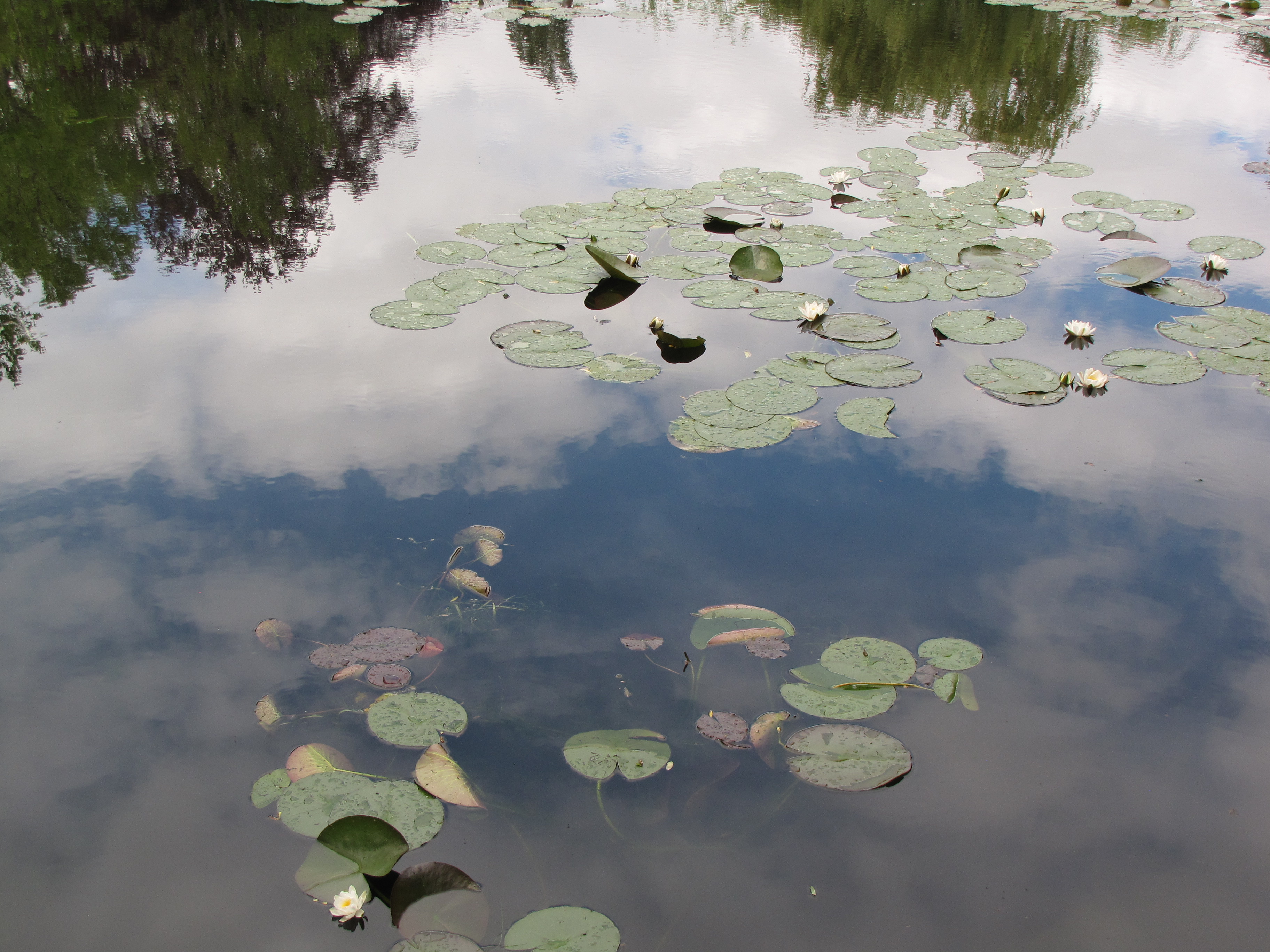
I’m excited to have the opportunity to write at the Wellspring House in Ashfield, MA. It should be a relaxing and productive few days in August.

poet
I’m excited to have the opportunity to write at the Wellspring House in Ashfield, MA. It should be a relaxing and productive few days in August.

Eric and me at Chenonceau castle in the Loire Valley
After visiting La Cupole in Paris, I thought I’d share this poem which is published in Lune de Miel.
History of a Table
The bar where Henry Miller drank
tenders a thin table beneath a mirrored wall
scoping author’s portraits and patrons who filter
into booths and pout with espresso mouths.
I am only apprenticing Paris. We’ve scrapbooked
ourselves here to dip into the ink of artists like us
who came to loot and ransack the city, to hunt
amid gray, cobbled streets, take the surly and brooding
pelt of phenomenon and deposit a littered alphabet
of new and debaucherous talismans. My pen
trembles, and I ache to write myself into a version
of original sin, revel in the profanity of life,
and spit into my inkwell. Beneath Hemingway
my new husband scribbles in his moleskin.
I fix my eyes toward the ring on his hand.
By the time my cocktail abandons me
I have taken custody of the deserted chronicles
left long ago on tap handles and between floorboards.
My husband closes his book; we leave on the table
a handprint of coins and a pocket of space.
The apprenticeship ends with the looted winter air
sweeping us into the amulet of an unwritten book.

Eric at La Cupole

Me at Cafe Flore

at Le Petit Pouce
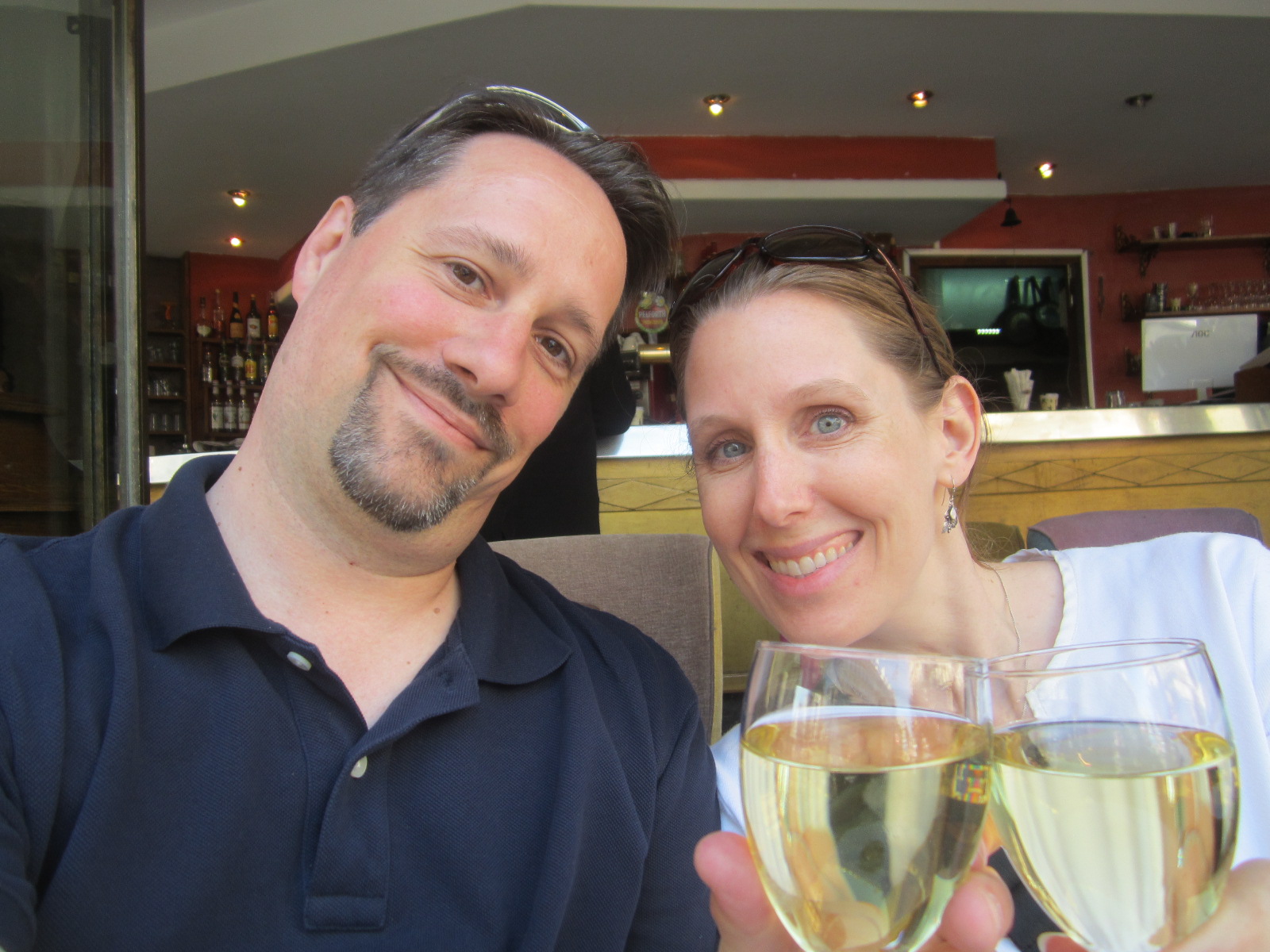
Les Tetes Brulees
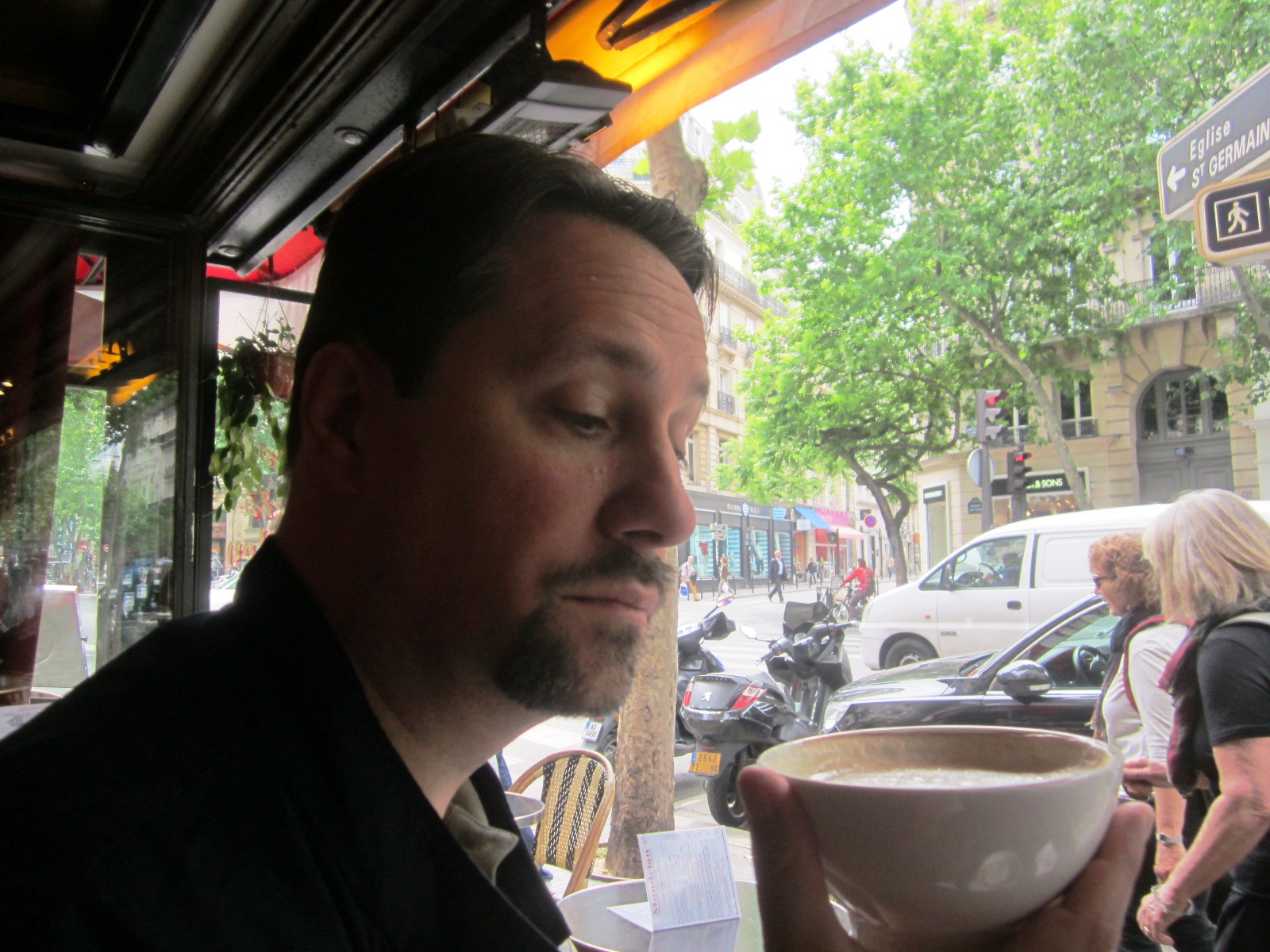
Cafe Mondrian
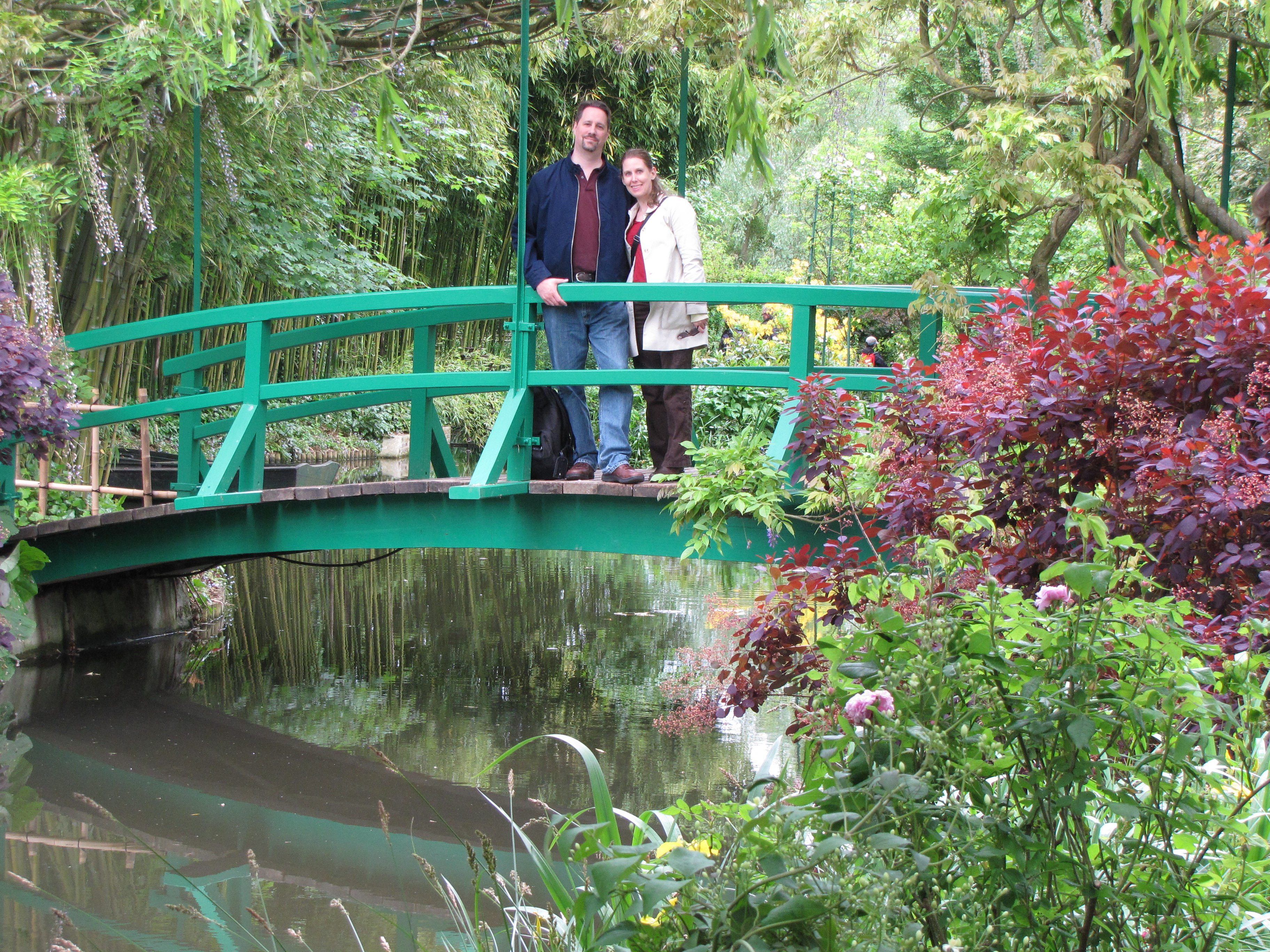
Les Nymphéas de Monet
Something akin to blindness occurs
stepping into the blue cataracts of water
that spill through the elliptical rooms
of Musée de L’Orangerie. Eyes,
like lungs of a diver, endure only
for a few emerald moments before
they must blink away liquid and re-submerge
beneath a lily pad. Swimming slowly,
we bathe in amethyst pools, blur into
the mirror of clouds reflected on cobalt.
As willows sway over bedewed clusters
of pink and white, all is reflection. The sun sets
and we wake into the piquant Giverny morning
where we go to dream, and where we hope to die.
You can find this poem and other about Paris in Lune de Miel. The read gardens are not easily comparable to the murals at the museum. Not comparable in the least, two completely different experiences. A good place to die, indeed.
I was in France when Maya Angelou died, so I didn’t hear the news until we got back a few days ago. I was a little surprised to hear that she was 86, but if I’d thought about it, with everything that she’s witnessed and encountered, she had certainly lived a full life. Eighty-six sounds pretty good.
I read I Know Why the Caged Bird Sings for the first time in the 9th grade. It was one of the books on the summer reading list, and it’s still among those that affected me the most that freshman year–the same year I read Kurt Vonnegut, Richard Wright, the year that solidified my love for the written word and for the power of art to teach, inspire, and heal. I’ve never been a big fan of Angelou’s poems, but she is often the poet that gives my students their glimpse of poetry, and they are always quick to cite her as their favorite. She’s one of the poets that led them to feel the power of words, and that’s truly phenomenal.
My second memory of Maya Angelou was from January, 1993. I thought about it only this morning, and strangely I’ve never put these things together when I thought about Angelou’s poems, or when I talk with students about her work. Having missed out on most of the 1992 presidential election news, I was recovering from an illness at Gaylord Hospital. Not much is clear from the previous months, but I specifically remember President Clinton’s inauguration and feeling strangely giddy because a democrat had been elected, and more so that a poet was there with him. A poet; poetry was there. It was soon after my 20th birthday. I was beginning to piece things together after a “long sleep.” Things were looking up, and I remember feeling like myself again, with my cropped hair, red, acne pocked face and tracheotomy scar. I clearly remember Maya Angelou reciting “On the Pulse of Morning.” Not the words necessarily, the image of her standing there. And I remember exactly that I felt, for a very short time, invincible. Poetry was there, and Maya Angelou helped in a small but significant way helped to remember poetry. That’s pretty phenomenal.
Sunday Double Header Poetry Reading
Poets David K. Leff and Amy Nawrocki will read from their latest works. David’s latest book Finding the Last Hungry Heart allows readers to enter a world where the past is present and stories matter. Teens climb a landfill fence, the 1960s come alive, and a disillusioned refugee from those turbulent years rediscovers himself. In Amy’s poetry collection Four Blue Eggs, her poems propose that though “we earn the favor of being by breaking,” the pieces are salvageable; bruises heal from the inside through the universe’s infinite surrogacy. Join these two great writers for a Father’s Day Treat. Amy will also be signing copies of her latest collaboration with husband Eric D. Lehman: Literary Connecticut. Free and open to the public.
I had my second (routine) mammogram on Friday. In honor of (hopefully) nothing, here’s my poem which appears in Four Blue Eggs. Mammograms are the best detection against breast cancer. Please schedule yours. Saving lives is worth a few squishes.
First Mammogram
Around your waist,
the heavy
reminder of radiation’s paradox:
destroy in order to save.
Contorted and squeezed
between those black
and icy plates,
breasts lose their pink.
On the monitor,
a white sphere glows
like a waxing moon
against
a starless sky;
bright, lunar plains
of tissue inherit
the elemental factions
of light and dark.
There are no blemishes yet,
no knotted anomalies
peering from behind
tungsten and detached electrons.
The silhouette
does not wane
but remains inert.
As you watch the screen,
this lace terrain of smoldering
luminosity is beautifully
static, killing time,
waiting for the variable
to appear, waiting
for the blackest night, waiting
for the new, undetectable moon.
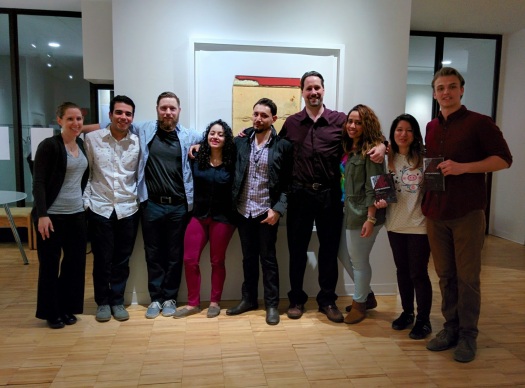
Though small, the group of Creative Writing Majors is totally awesome. Every once in a while, I’m reminded of how great it is to be a teacher.
Literary Connecticut: The Hartford Wits, Mark Twain, and the New Millennium is now available from the History Press. This is my third collaboration with Eric D. Lehman–the best husband and writer in the world. Learn about your Connecticut ancestry through books, poems, and plays.
Our copies arrived today in the mail!

 Amy Nawrocki