There Are People in the World

There Are People in the World

There are people in the world, I’m sure of that,
seen with their comings and goings, umbrellas,
rain-coats decorated with loose buttons
and the long belt that loses its way out of one loop,
nearly dragging on the ground. These people I know,
appearing in the long shot of a movie—exterior, train station, doors
opening and closing with magnetic pull. They’re standing
clear, sidestepping the train’s brutal electricity
and its indigo machinery.
There are machines too,
I’m sure of that, inventions clean and useful—gears,
trapezoids, unfathomable windmills in far away places,
put there by men’s curious hands, the systems
hatched from brains piquant and bloody. The train’s careful maze
of nerve endings, synapses, breaks and rotors,
tendons of its apparatus.

In briefcases and tailored purses, the people
and their inventions mold this dingy world. They carry
metal philosophies, jagged pieces of technology—gadgets,
watches, cell phones, doodads to tinker and tryout,
music and messages packed into files, accessible, tremulous.
The shoelace keeping the shoe in place, the shoe that eases
the foot down onto the heavy pavement.

Which do I prefer? The categories of people sandwiched
into their compartments, or their progress
that makes the train, the clock, the rails,
the beams and sinuous bricks bellow
in synchronicity—the track or the engineer,
the raincoat or the seamstress, the ticket, or conductor
punching my ticket, selling the fare, his face sandblasted,
chiseled, aching to tell me its ingenuity.

This poem appears in Four Blue Eggs. You can still save 20% for National Poetry Month if you order now!
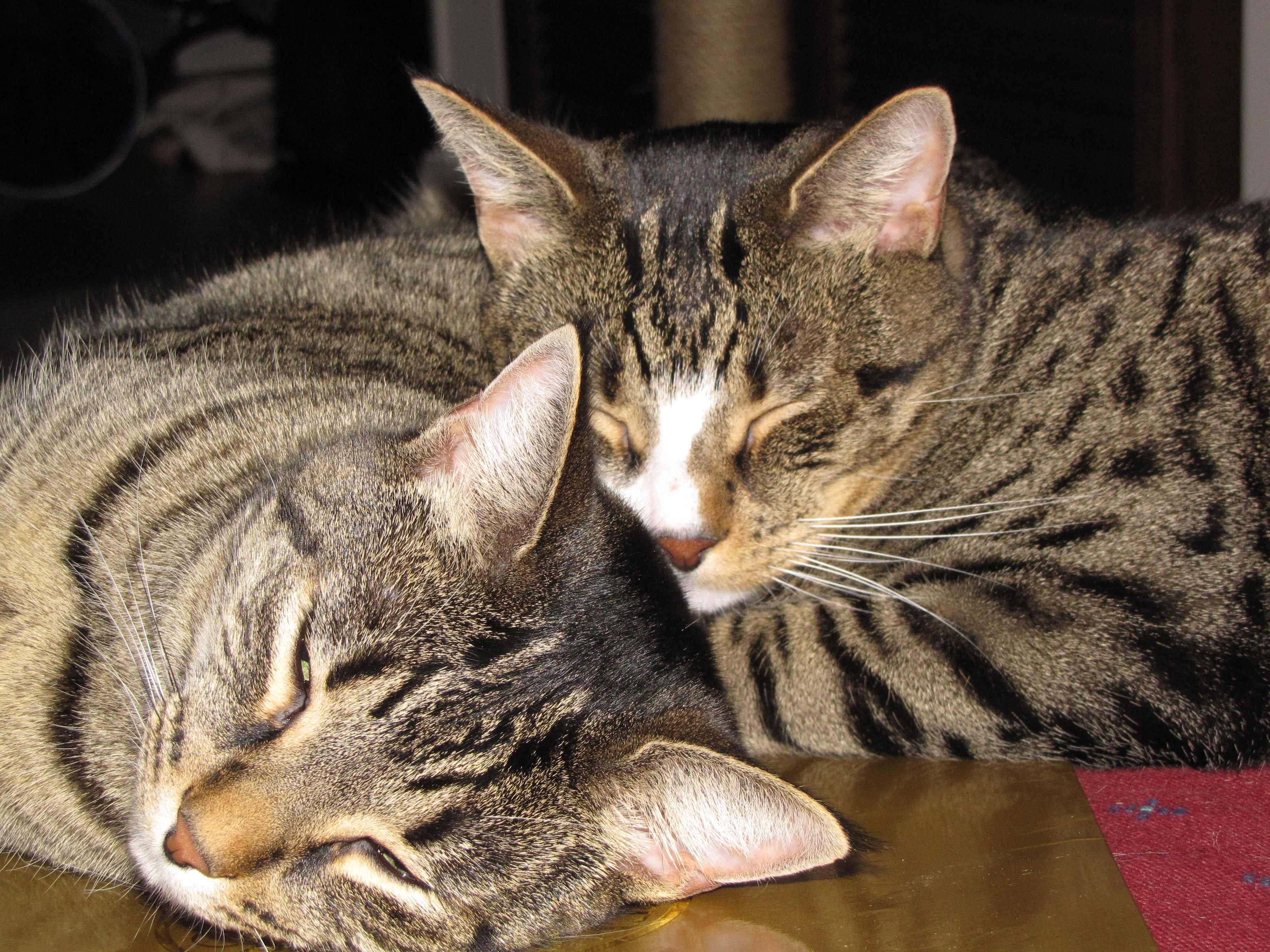
 

Cat People

Here is a poem from Four Blue EggsOrder in April for 20% off all poetry titles.

Cat People

After a while, the questions went away.
But even when the kittens came home
it was hard to convince my mother-in-law
that she had two new grandchildren—
the family we chose to be falls off
the flat map of expectations. Must we keep
our parenthood close or share it only
with the few who nurture and know?

I snuggle my daughter and contemplate
the mystery of her purr, smile with delight
when her brother crowds my knees.
But that is not enough. How to explain?
Perhaps this: the day my mother died
on the living room couch, we all slept
upstairs buried in blankets and scary
dreams, but the tabby bravely hugged
to her side, curled into an omega,
and kept watch as human night closed in.


Image

Maple and Django


Image


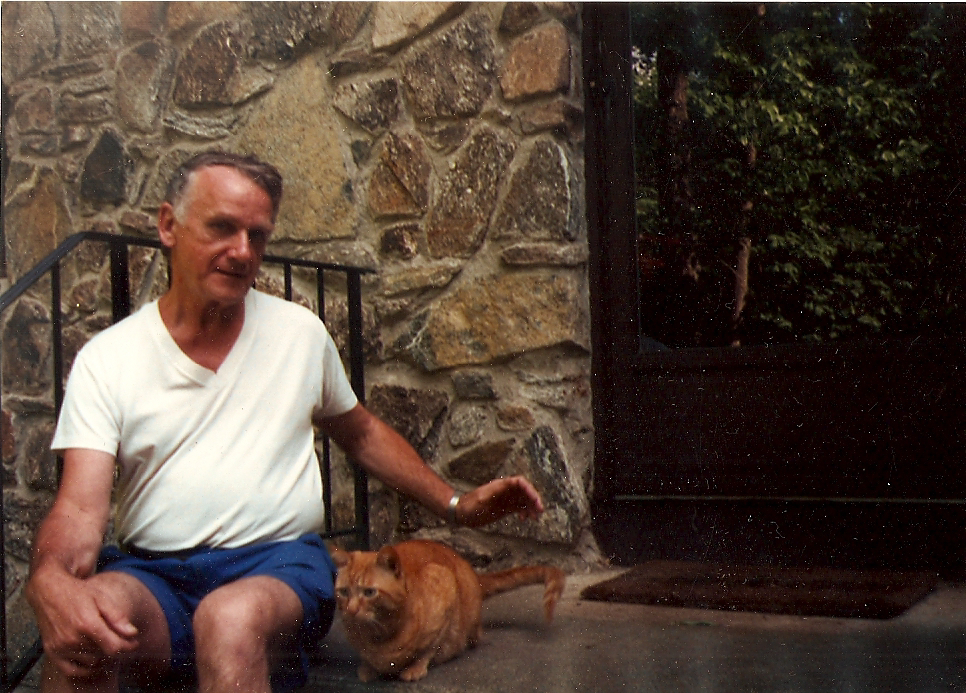
This is Nikki, our childhood cat, with my dad.


Achilles, Swift Runner

For Julia, who’s been studying Greek Mythology. This poem appeared in a recent issue of Illuminations, from the College of Charleston (SC).

Achilles, Swift Runner

It’s the idleness that begs you
to be stationary when most of you screams
to move. A catalogue of gym classes
run through the mind on an old projector—
the last roll spinning to a clicked ending
as it speeds down—the final fat kid

remaining against a concrete wall,
standing still and shifting too much weight
from foot to foot, never running
to line up with the others: Sal Padula
who called me Bozo at the bus stop; Beth Ryan
who snubbed me in the hall; Sam Smith
who wouldn’t dance with me unless
the group filled into the circle around us.

The pummel horse waits with mats and onlookers
for me to crash my head against its folly,
and I want to run, swift Achilles,
to the far end of the horizon. Dawn
can mesmerize and keep me whole. So much fury
in the ankles means the great hills cannot claim me.

The day comes when stretching legs
on the family room carpet becomes
a trip to the mailbox, then, around the corner
and up the long slope past the fork in the road
where cool autumn breezes sing in eager ears
that survival means forgetting boys, kicking
the habitual ball of self pity, punching
the horizon of possible pathways.

I am swift runner, born out of blessed dreams,
cool and uniform motion. As I go
I narrate my journey. I was the fat kid, look
at me now: Achilles burning
up the last hill. The victory is absolute.
I run another mile, just because I can.


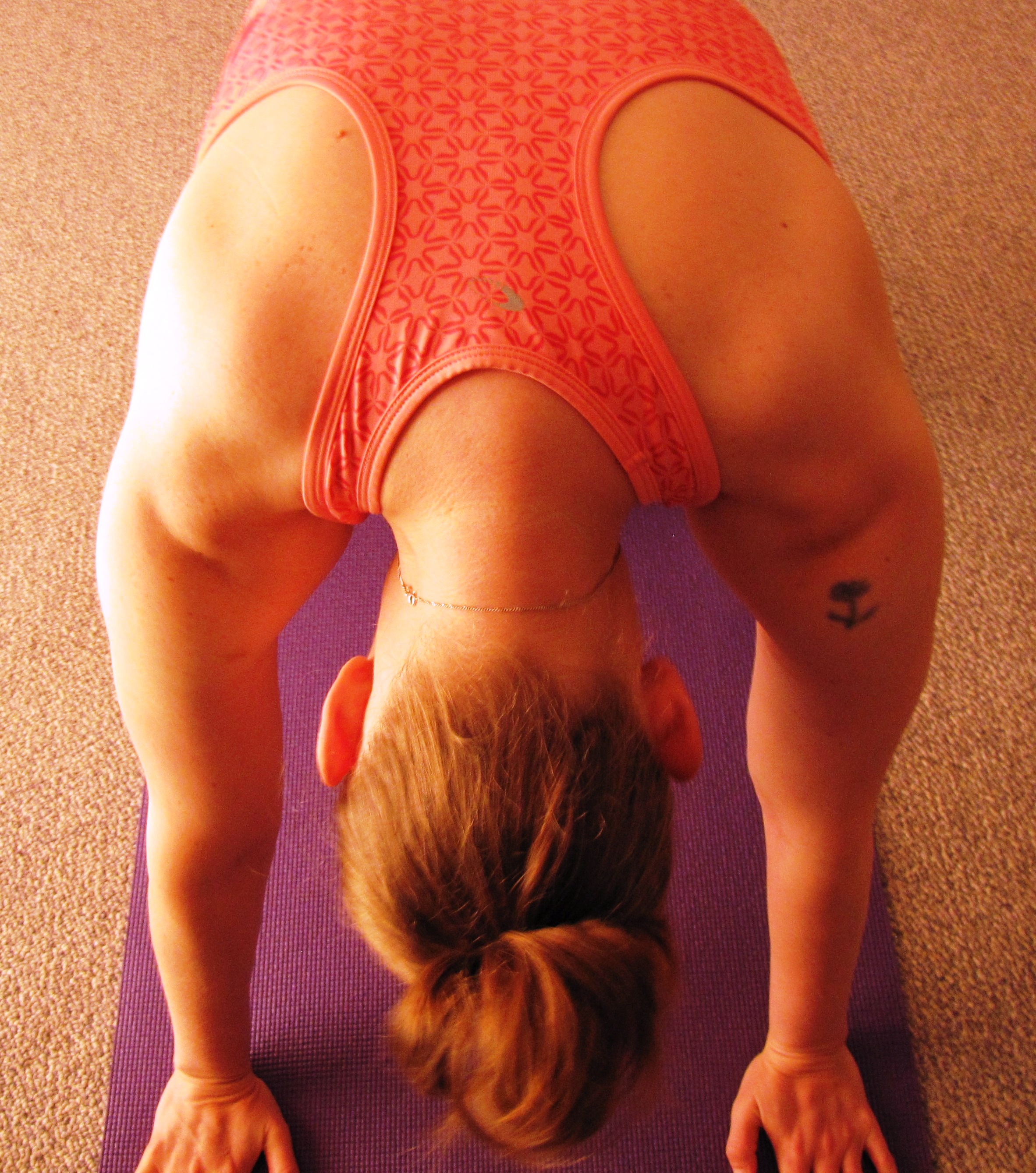
Thanks to Achilles, I got strong. Yoga helped, too. And weightlifting, and Eric . . . Image


From Lune de Miel

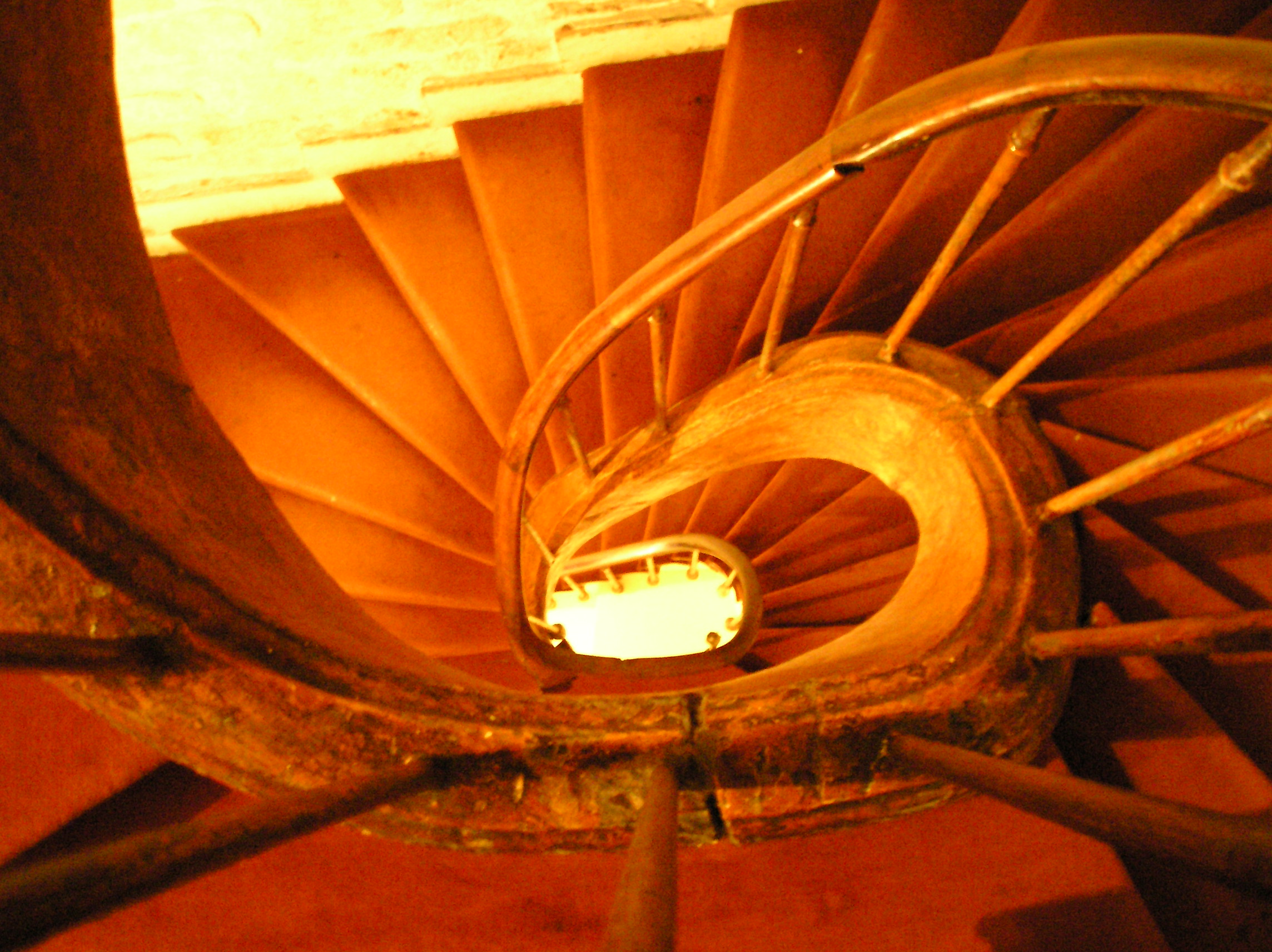
OLYMPUS DIGITAL CAMERAThis poem appears in Lune de Miel, published by Finishing Line Press in 2012.  The title is the address of the apartment Eric and I stayed in while we honeymooned in Paris.


3 Rue Tiquetonne

Even as I climb the tight spirals
of the staircase and trace small hands along
16th century wood beams to the third floor,
I still hear toe shoes in my mind, tapping
on the elegant floorboards of the Paris Opera House.
Chagall’s ceiling directed ornaments,
and music, swift and animated, plotted
the way for dancers, but my mind is full
of pirouettes that leave only a pucker of sound.
With a soft click, the key opens the door
into the dim apartment. Everything is small
and crowded: Parisian thrift arranged
with black and white photographs,
silk throw pillows and mismatched glasses
in the tiny kitchenette. A derelict
leather chair, a few ottomans and a broad
maple coffee table plot the stage
of bookshelves filled with old jazz.
Parquet creaks, the day’s loose change
spills with dull cadence onto the table,
and as I leaf through my French dictionary
the pages rustle until I find pamplemousse.
I want to know the translation of the grapefruit
that the market approved for breakfast.
Tonight, green beans and red onions chassé
in the buttered pan, but the life of a baguette
lasts only six hours, so I must act with haste;
I listen for the crackle of bread crust
in the acoustics of the red curtained Paris loft.

from Nomad’s End

This poem appears in Nomad’s End, my second chapbook published by Finishing Line Press, which you can order here.

~for Eric

Before Your Train Leaves

a handful of minutes need to morph
into their shape, crust like atoms
becoming a molecule and tell a story
with thrift. No time to dawdle.
Back-story, established by your eyes,
advances the plot, though I am more interested
with the syllables of touch than
the tactility of speech. We pool
into the sparse bed and handle
each other like pottery clay, mold ourselves
into familiar shapes. I smooth
your back as moments hoof between
the walls of the room. They assemble
in the sphere of a clock above our heads.
Before your train leaves, the hands
will complete their circle; our story
will end as most do, with goodbyes
filling the grooves between scripts.

Image


Annotating the Text

This poem was the first place winner for the Litchfield Review Poetry Prize a few years ago. You can also find it and others in Four Blue Eggs. Purchase your copy for a 20% discount during National Poetry Month–April

Annotating the Text

I tell my students to take up
their pens, savor the highlighter,
revel in the anticipation of appending
the words we make love to.
Most let their eyes follow the page
but not their untrained hearts, although
timidly, a few scribble whispers
on pages, becoming active, joining
in a dialogue with Bartleby.
One day they might revisit
these tactile memories, permanent
records of their comparative thought,
or maybe one of them
will remember this intimacy
upon finding, deep in the Tragedies,
her mother’s small handwriting
on a copy of Othello, urging Desdemona
to stay the course. One of these daughters
will find buried in the basement
dog-eared, spine broken, her name
underlined with a star next to it.


Sample Poem from Four Blue Eggs

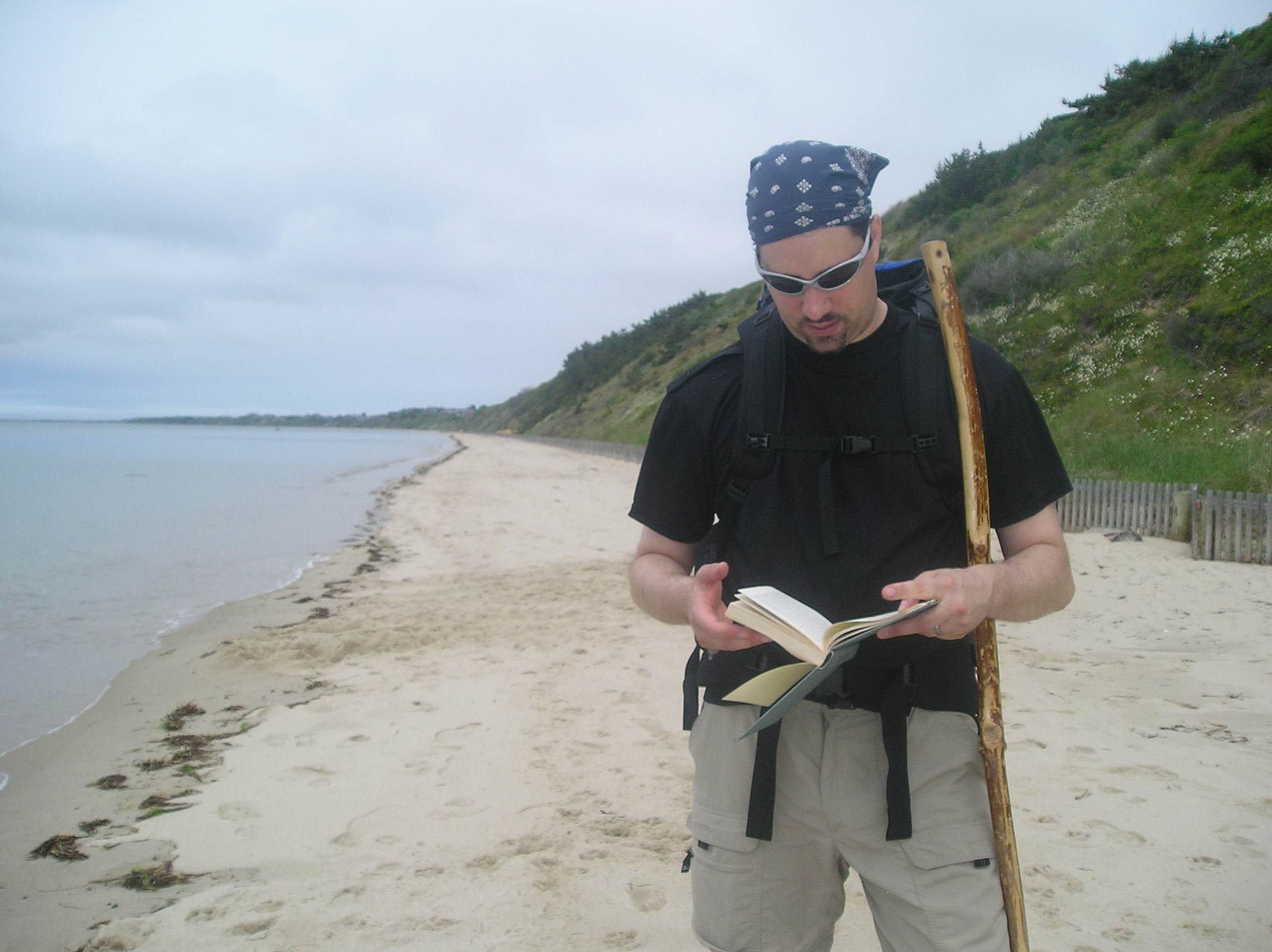
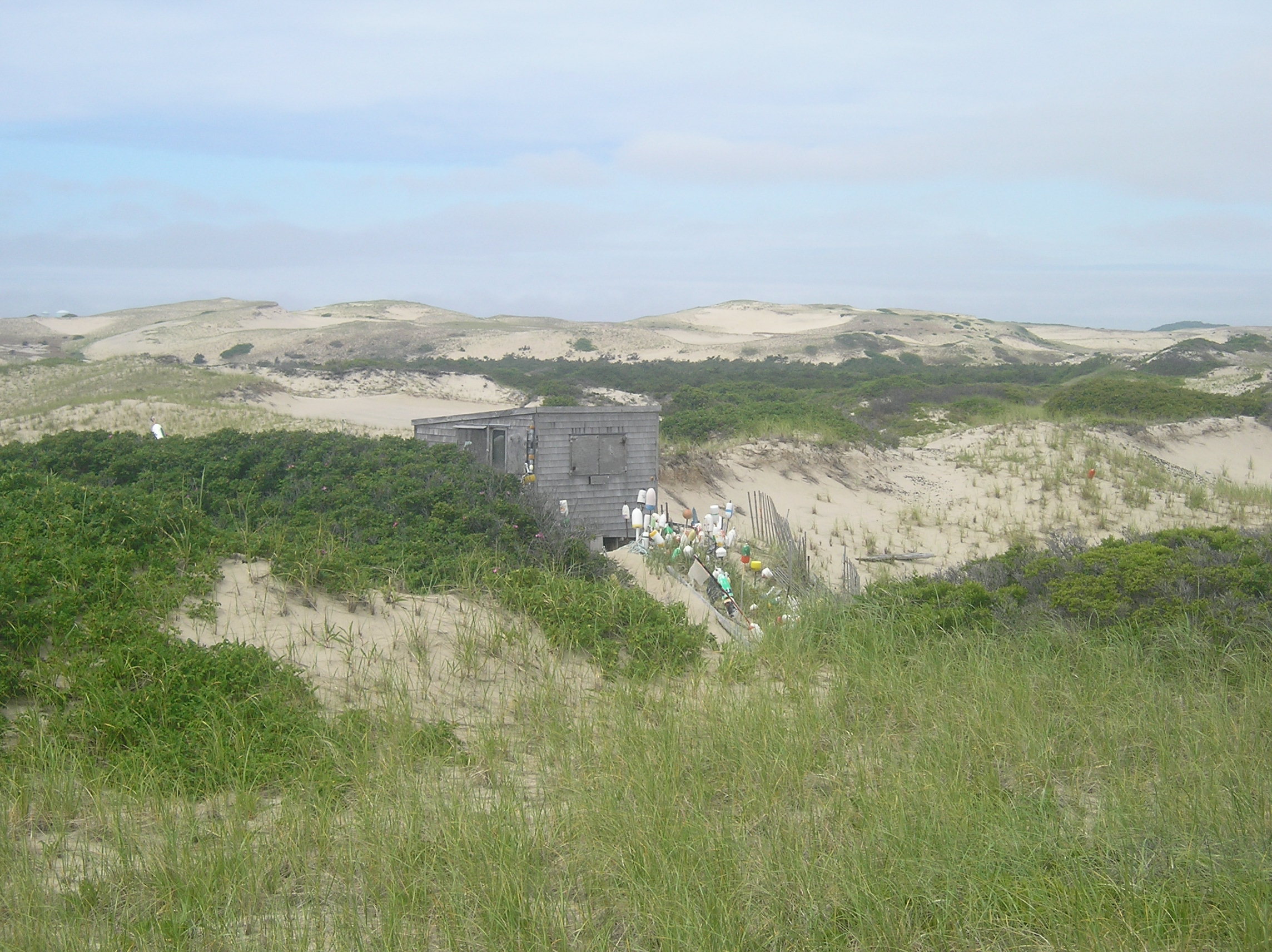
This poem (which you can find in Four Blue Eggs, available for 20% off in April) was inspired by a hike Eric and I did in Cape Cod a few years ago. We met painter Laura Gajeweski who was working at one of the dune shacks.

“A Great Deal of Company”

~from Walden, by Henry David Thoreau

After the storm, the loneliness
does not evaporate. A half-day trek
to the shingled cottage through dunes
ripe with coyote tracks and unfriendly
dwarf pines means another week in isolation
with only the oily pigment of August
and the acrid stink of turpentine
to argue with. Even when the sun
in its naked, unforgiving callousness
ventures out again, holes in the atmosphere
remain. It could be worse.

A fourth trapped mouse rumors
to be still alive behind the shack,
and the ghosts of bums and poets ricochet
around the creaky loft. These, anyway, are voices,
consolation for the blank canvas in front of her.
A still life of bowled fruit decays in the charcoal
of her mind. First the brush must dip itself
into the clear water where the muses bathe,
but the well coughs up only the red iron of earth.

Once the mottled conglomerates
of sunset arrive, dinner is made; the wood stove
sparks against a damp log, the unswept floor
calls for a broom, and the burden of idleness
finally exhausts her. She dunks dry bristles
into wet, sandy paint, spreads black onto white
and forges a scene: stick figures walking
in the terrestrial moonscape of dune summer.
Then, a blue crescent of water loops off
the feathered page, blurs past beach grass
to the deep, ample surf, its shores crowded
with the blinking eyes of sea gazers, each
with gravity ’s sadness salted to one brush tip.


Image

This wasn’t the shack Laura was staying in. Hers was a little bigger.