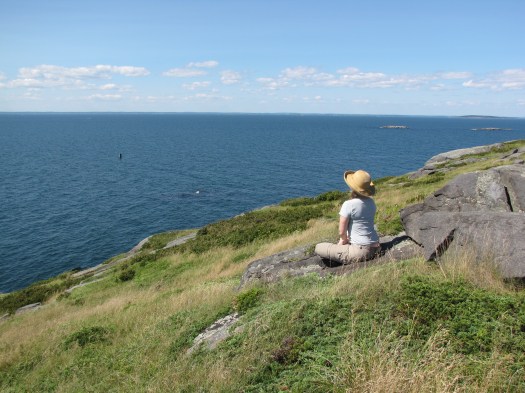
Dunes of Heather


IMG_9370Loch Tay

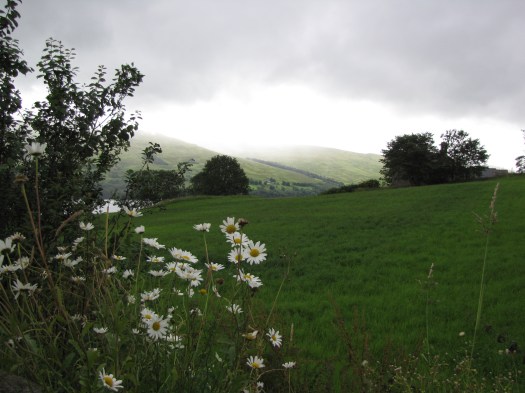
Between the castle and the Loch—
a long way by car—
we harness wet
shadowless views of fells
and sloped valleys.IMG_9572
Between the bald hills
and our partially cobbled way,
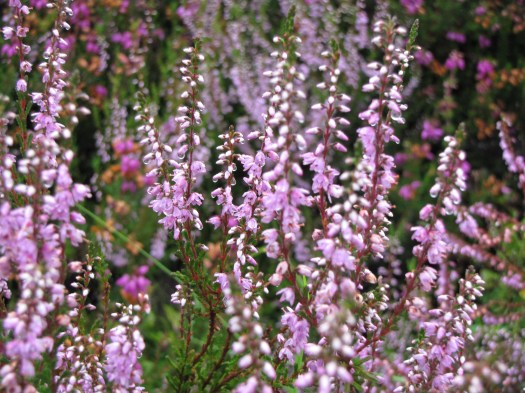
dunes of heather
roll out like quilts over
the bracken-covered
hillocks where sheep graze
quietly, unaware of anything
but the taste of clover and
the crunch of yellowed grass.
While hedges of purple
sprawl across the hilly pass,
the rain only seeks to glisten
the already blurry passing of time.

IMG_9455

from our 2011 trip to ScotlandIMG_9407

Peregrine–Anthologized

My poem, “What I forgot to Ask” was recently selected for the Austin International Poetry Festival  Anthology di-verse-city. The poem found its way into the world after I watched a peregrine falcon lunch on a nuthatch in my front lawn. The nuthatch is unconfirmed, and “lawn” is a generous term for the smattering of beeches and oaks in front of the house.

I missed the reading in Austin, but I’ll savor anthology when it arrives–a long list of talented poets. To order a copy click here. Celebrate National Poetry Month with a bird, cat, human, or mouse of your choice.

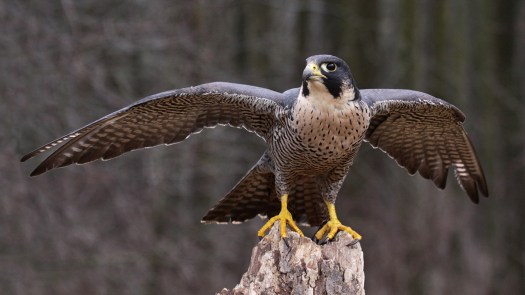
peregrine-falcon-wings-extended nat geo credit

(photo courtesy of National Geographic)

What I Forgot to Ask

I do it all the time, mistake flight for freedom;
escape for repentance. If only,
like a peregrine, I didn’t have to explain
my silences or defend my stealth. She descends
cliff ledges with confidence under cover
of camouflage. I cannot leave
this nest of caked mud and broken twigs
or cradle the updraft between fingers.
Too much captivity makes a girl tired.

What language do you have
for the barren days when nothing catches your eye,
when speed doesn’t win? Is there ever an hour
when you want no wings? to tuck feathers away
and wobble on talons like a cripple?
Tell me about the wind, the kind
that quiets fear and lengthens your cries
into inaudible whispers. When do you rest?

For more peregrine inspired work, see my essay “Choosing Peregrine” in the Homebound Publications anthology, Wildness: Voices of the Sacred Landscape

Origin Stories

Watching the documentary Exit Through the Gift Shop,  I again considered the junction between permanence and artistic expression. The film which is about, among other things, street art, made me wonder about the image (or object), the artist, and about what happens to both when the image is done. Gone or preserved. Momentary, like the croak of a frog or lasting like the croak of a frog through the forest of time. dsc_0367

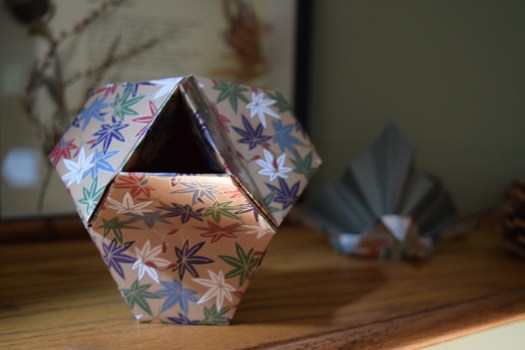
For a while now, Eric has been encouraging me to see the origami I make as more than just folded paper. I know origami is much more than folded paper; it’s ancient, expressive, precise, colorful, intricate, disciplined, beautiful, worrisome, elegant–both object and idea. My pieces mean a lot to me, and I save them. They’re made, crafted with skill (varying levels in my case). While I’m following a pattern, each piece is built with my choice of paper and pattern, creased by a few sensitive fingers that create mountains or valley folds, which become cranes, boxes, pinwheels, decahedrons, fish, turtles, and flowers. Eric thinks they’re amazing. What to do with them?
dsc_0730

First, we thought of photography as a means to document and also preserve them. (I’ve also tried lacquer, but not so good). Then the photos become art too. Or do they? What about creating a new art form? How . . . maybe why? So far, I’ve come up with versigami–combining poems, shapes, and photography. It’s a work in progress. Here are some of my first efforts.dsc_0402
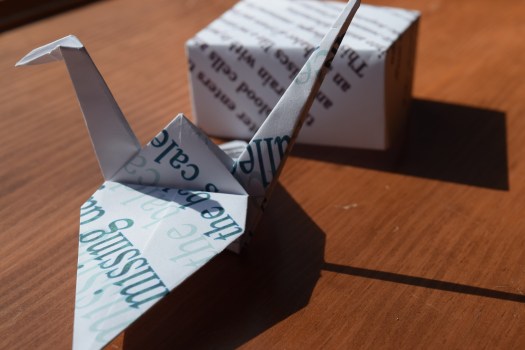
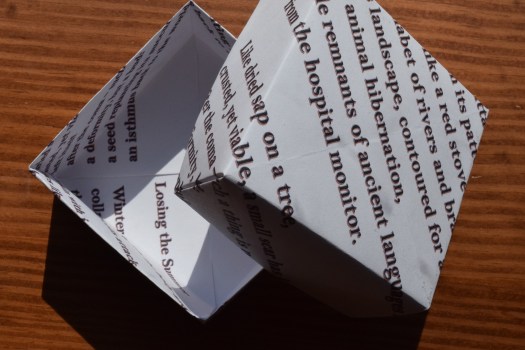
Poems “Accountability” (crane) and “Losing the Summer” (box) took shape when I printed the text onto the paper then folded it. New? Maybe.
dsc_0425

As part of the process, I had to figure out how to get the text to anticipate the folds, not as easy as I thought it would be. More to the point, I had to start to see ahead to the folds. Where the words appeared on the paper was important. Without the dexterity of a good design program, this proved more complicated than my four-o’clock self really could handle. After a few print outs (and font fun), I could find a balance between words and no words. My poems are more permanent to me in print–for this project I want typed words, not handwritten ones. dsc_0411

There was also the matter of what the actual poem says. I want the words to mean what they mean as a stand alone poem, but also in this new manifestation of versigami. “Losing the Summer” worked well because it’s about, well, loss–the missing pieces. I liked that as a visual theme as much as a written one. dsc_0430

I would like to experiment more with shape, text, process, and finality.

The poem was featured in Four Blue Eggs and recently cited in Gaylord Contributions so maybe versigami a way to reinvent it, update and give it additional life.

Amy Nawrocki was on summer break from her freshman year at Sarah Lawrence College in June of 1992 . . .  [Read more

Origins. Versigami, transience, permanence, folded and unfolded. “Such a thing is not /

“Such a thing is not / dsc_0428a deformity, but a bud.”

Prose and Poetry

A wintery poem from Lune de Miel, Paris honeymoon, marriage, aging, and how the past maps itself out in pieces to be collected when you get there.

 At the Café Select

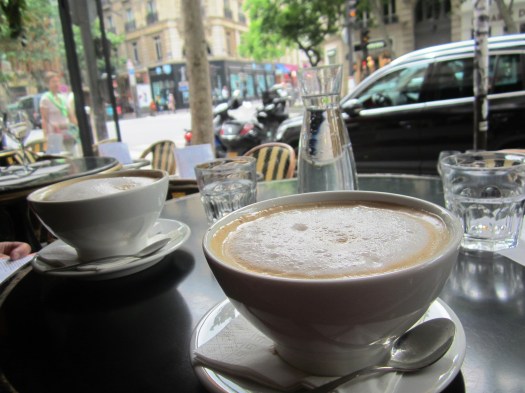
Rue Montparnasse bustles outside the café window. It seems that there are very few hours of daylight in the Paris winter, though perhaps when something is condensed we can find the best part of it, like the pulp of a nut. As I watch passers-by folly onward, I listen to the voice of an American man talk about his life to a companion. I’m surprised when I turn my head to see that she is a younger woman. With my back turned to him, I imagined him telling his story to an old Navy buddy or a colleague he’s met for business. She is my age and this reminds me that I’m a week away from my thirty-fifth birthday. I hear him tell her about success, and he uses words like celebrate and thrive.  But then his voice dims and I wonder if perhaps he’s slipped into French; perhaps I am just lost in the gloomy sidewalk, the gray pavement only a few shades deeper than the sky.

Later I catch him say that he doesn’t feel like a success; he pauses and continues with “in some ways more than a success.” “I have survived,” he notes. I guess his age to be seventy, perhaps, a few years younger than my father when he died, a few years younger than the ash-haired woman with a cane who passes by the window. The woman wears a tweed coat that falls just past her knees; her pale stockinged legs move slowly, even with the aid of a third. Her success is quieter, though both journeys have fought off the closing of many hours. I doubt that this as an adequate measure of success, though I like the simplicity of such an idea, as if all we had to do was float like tree branch down a long river.

The café-crème is cold by the time I turn my attention back to it, and having to strain now to hear their conversation, I lose interest in the man and his companion. Instead, I glance up to see my new husband writing a story about a little Danish boy whose mother dies. I think of my father and mother who both missed our wedding, and I wonder about the river’s end. As my thirty-fifth year comes to its end, I may be halfway there, to the moment when I recount my hours and ponder the scope of my successes. For now, I put on my own tweed coat, reach for my husband’s hand, and trace another’s steps down the boulevard.

Click on “a story about a little Danish boy. . . ” img_5134for the current issue of The Passed Note, a journal which features “The Wind Barrons of the Pharo Islands” by Eric D. Lehman, the very story described.
 

Inside the Confessional

A selection of my poems was recently published in Sixfold journal. Many thanks to the editors and the Sixfold poetry community. Poems are selected by popular vote by multiple readers. With tomorrow’s predicted snowfall, here’s the link and a few teasers:

Waiting for the Plowman
In the morning: Rousseau’s Confessions. Breakfast:
something forgettable and unfulfilling, toast,
the white of an egg circling a shiny yolk.

By midday, the desert of chalk buries the laurel
and watching juncos burrow under the feeder
suffices for motion. Blank under its plastic face

the kitchen dial signals two o’clock with sleek
anemic hands. Within the hour, sugar held
in the spoon’s mouth is let go into black liquid,

and boots, scuffed and sheltered alert the tangled
knit scarf to concoct itself. At four, shovel in hand
I depart to do the job myself. The man

and his truck are nowhere to be found
even though the blizzard’s end is new
and he promised and there is a lot of it.

Lighter than a pile of proverbial feathers
but sticky and heaping, the first bundle I take
begins to build a dune around the driveway

but there is nowhere else to go and no rest
and nothing to do to lessen the white
except to bend at the knees and let it fly.

Literally

She says without irony or modesty

I’m literally so irritated, as if irritation

could be anything other than literal . . . 

Bad Girls

The boy at the pub had blonding hair

and a round face

and we were cruel to him.  . . .

Instead of Poems

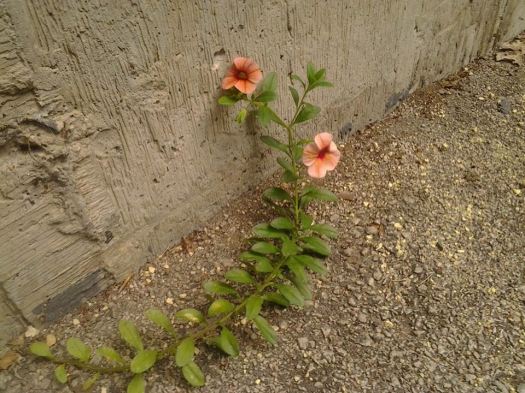
Instead of poems, I weed the sidewalk

and empty crevices of intruders.

sidewalk petunias

Gratitude

Gratitude


If we could have read the moon’s face
through the falling snow
that night we drove into its absent shadow,
it would have told us that the cold
sometimes melts things, too.
The train station, under hazy yellow lights,
fills with travelers arriving for Christmas.
We drive home with our father,
a faint smile crooked in the low end of his mouth.
Because the road hides so much,
more than once, Dad mentions black ice
the way he’d repeat an argument
until we understood. But when the car,
spins momentarily toward the guard rail,
he anchors us—and we are held
by his steadiness, which, for so many years,
we mistook for other things—
discipline, scolding, but mostly anger.
It’s time now to take this lesson
and file it safely under black ice,
reluctant blessings, how our father,
silver haired and breathing slowly,
saves his children’s lives yet again.

A poem from Four Blue Eggs, images from London

Portraiture

A poem from Potato Eaters (2008 Finishing Line Press). Be grateful this Thanksgiving.

Portrait of a Girl and Boy on a Bus


She is seven, maybe eight; cords of brown hair
weave around her neck, weary of years.
Holding her brother’s hand
as loosely as a button off a winter coat,
she waits as he climbs the broad bus steps;
he doubles up on each, just missing a shoelace
undone and unraveling from each of his shoes.
A pair of red knit mittens connected by string
falls loose as her arm laces around his frame;
his hair, misshapenly cut, hides a blue bruise
behind his ear.

Protecting his six years,
how she glows—as if light winked
from under clouds, and cast a coral light around them.
If only sand coursed beneath their feet,
and starfish gleamed, the ones they’ve never seen
land-locked by this turbulent bus,
this unlucky globe.