Giving up the shell can be hard, but so worth it. After nomading, we find home.
Abandonment
Naked, the crab forgets
his hermit ways, creeping
in the oyster underworld,
brushing against minnow fins
and ugly red claws, until
nomading ends, and a home,
spiraled in calcium, appears.
A watery cosmos of green
awaits the refugee shell;
the sea is populated
by old dwellings, discarded
by molting crustaceans, spit out
for sand diggers and souvenir
hunters, strangled by a scarf
of seaweed or broken
with gravity’s axe, swung
by the long hand of the moon.
From Nomad’s End, 2010 Finishing Line Press
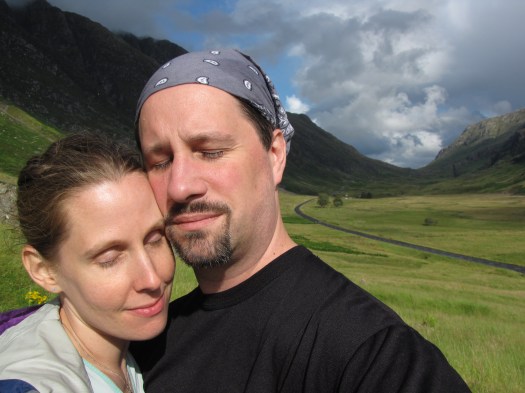
West Highland Way, August 2011; a little tough, a little glorious
The True Weight
We make a list of all our favorite moments—
best hikes, finest meals— skipping
over the hard parts—when boots filled
with muck and rain froze our hands
and spun through the plastic
of our water-proof coats, each cursed step
you suffered through pain without ever
surrendering to sighs. Cataloging
the singular bluebell doesn’t really
tell the whole story. The tiny tear-shaped
flower pressed between “A Dream” and
“Ode to the Memory of Mrs. Oswald”
in the pages of Robert Burns
does not relate the true heft of that volume—
the pages, browned and frayed, turn easily
one at a time but bound together
they hold the true weight of the poet’s words.
So too, yellow broom and wood sorrel
decorating the ascent through Glen Nevis
or the heather spilling lavender toward
the modest peak of Bien Inverveigh
can never be summarized
in one sprig of tiny rainbow blooms.
A Great Deal of Company
~from Walden, by Henry David Thoreau
After the storm, the loneliness
does not evaporate. A half-day trek
to the shingled cottage through dunes
ripe with coyote tracks and unfriendly
dwarf pines means another week in isolation
with only the oily pigment of August
and the acrid stink of turpentine
to argue with. Even when the sun
in its naked, unforgiving callousness
ventures out again, holes in the atmosphere
remain. It could be worse.
A fourth trapped mouse rumors
to be still alive behind the shack,
and the ghosts of bums and poets ricochet
around the creaky loft. These, anyway, are voices,
consolation for the blank canvas in front of her.
A still life of bowled fruit decays in the charcoal
of her mind. First the brush must dip itself
into the clear water where the muses bathe,
but the well coughs up only the red iron of earth.
Once the mottled conglomerates
of sunset arrive, dinner is made; the wood stove
sparks against a damp log, the unswept floor
calls for a broom, and the burden of idleness
finally exhausts her. She dunks dry bristles
into wet, sandy paint, spreads black onto white
and forges a scene: stick figures walking
in the terrestrial moonscape of dune summer.
A blue crescent of water loops off
the feathered page, blurs past beach grass
to the deep, ample surf, its shores crowded
with the blinking eyes of sea gazers, each
with gravity ’s sadness salted to one brush tip.
Sing to Me
Sing to me, Oh heavenly Muse,
Sing of the sea, “wine dark” and full of mysteries;
Sing your generous musings into my untamed ears,
Guide me to places where islands peek out and crest from the ocean’s swell of waves.
Speak to me of sailing, foreign speaking travelers, roads and pathways winding and steep, gravel covered, tree-lined and mountain rich, those which frame
the ocean’s mighty blue-black plentitudes in their sights.
Sing to me of gannets; the birds of prehistory captured in flight, white winged with sun-touched caps and eyes blue as the empty sky.
Sing to me of porcupines, earth dwellers of the spiny quills, shy and clover-munching; Sing of rabbits tramping through forests, stealing a moment to look out and survey the
open path, only to scurry playfully into the underbrush.
Bring to my ears the far-away call of the coyotes, watching over the mountain campsite. Bring to me news of whales, giants so gentle in their swimming, the sea’s expanse seems hardly touched by their brawn.
And Muse, bring to me tidings of love, companionship, a hand that reaches out and takes me into the pleasing sunshine, so that we will walk toward the horizon and find a
moment now and then to make love among the brilliant colors in the expansive catastrophe of this world.
Another successful release of Groundswell, the University of Bridgeport’s Literary Magazine, featuring poetry, fiction, photography, and drawings by UB students, including a pool of very strong Creative Writing Majors. This year’s editor, Jose Cabrera, served as emcee for the release party.
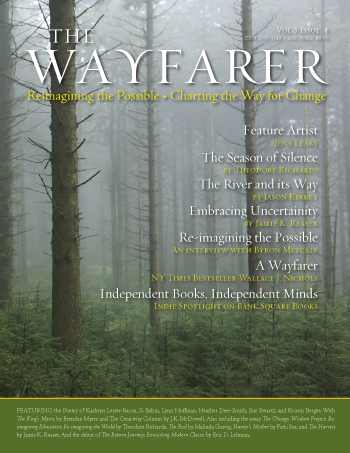
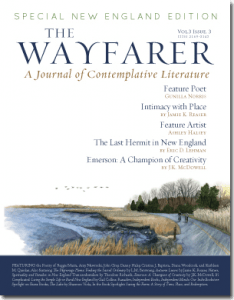
The latest issue of the Wayfarer offers a number of interesting, contemplative pieces including writing from Jamie K. Reaser, Jason Kirkley, and Theodore Richards. The featured artist is Jena Leake and you’ll find an interview with Byron Metcalf.The new feature The Return Journey offers book reviewsby Eric D. Lehman. This month he tells readers about the classic TheSnow Leopard by Peter Matthiessen.
I had a great time at Saturday’s book signing with David K. Leff and Eric D. Lehman. The booth was part of the Danbury First Congregational Church Fall Festival. If you missed all the local authors (we were just three of many), head over to Byrd’s Books and catch up on your reading list.
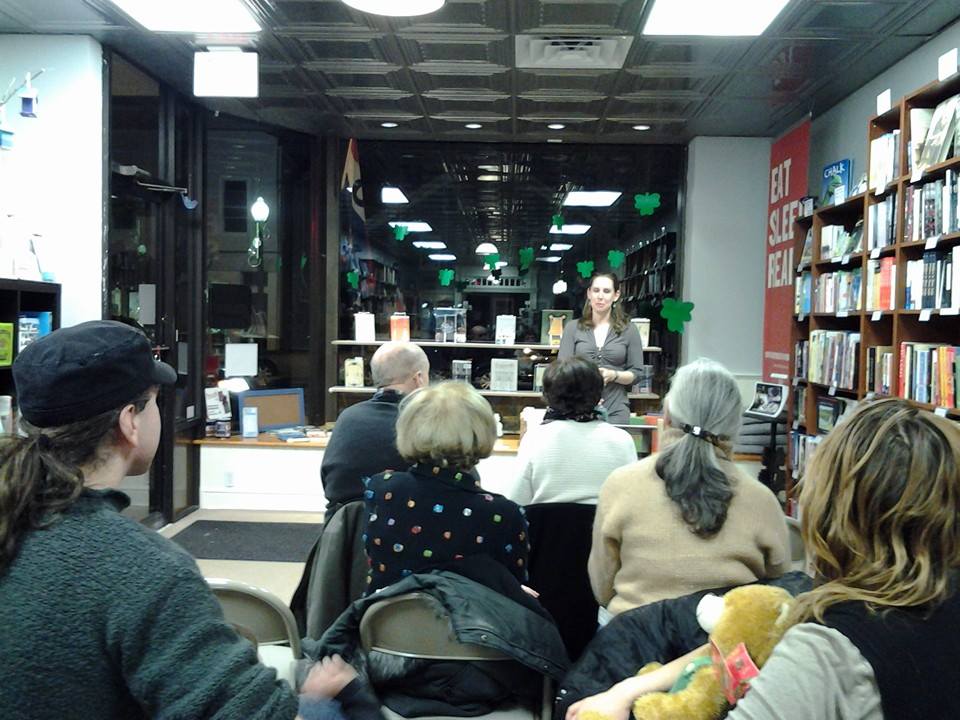
Here’s me reading from Four Blue Eggs in March at Byrd’s Books in downtown Bethel (126 Greenwood Avenue). If you can’t get there in person, you can order online! Support your local independent bookstore. Byrd’s is one of the state’s best.
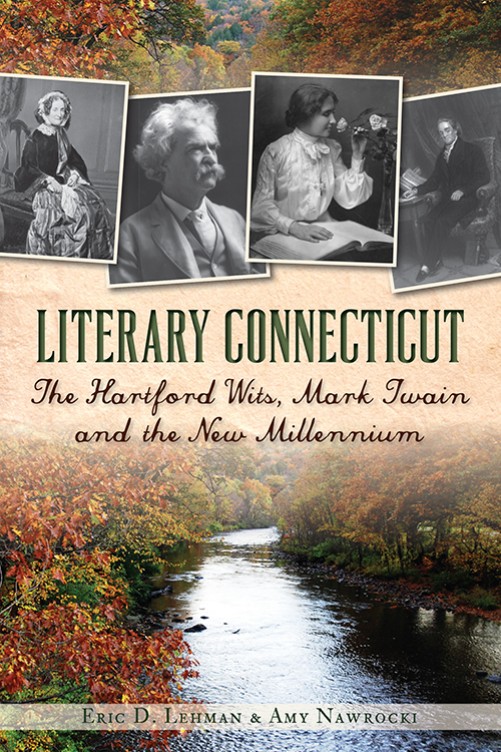
Join Eric and me Tuesday, Sept. 16 at the Miller Memorial Library. We’ll be discussing Literary Connecticut in the historic Thornton Wilder Hall. Learn more about Wilder and his fellow Connecticut authors.
Check out the Autumn issue of the Wayfarer. New England writers are featured, and you’ll find two of my villanelles as well as an essay by Eric D. Lehman.
Click the cover to pre-order your copy. While you’re there, order your copy of Four Blue Eggs from the bookstore.






 Another successful release of




 Amy Nawrocki