March 1st.
Join me and seven other poets who will be writing 30 poems in 30 days. Here’s the link. Check back tomorrow for Friday’s posts.
Thank you to all our supporters. Click to sponsor me

poet
March 1st.
Join me and seven other poets who will be writing 30 poems in 30 days. Here’s the link. Check back tomorrow for Friday’s posts.
Thank you to all our supporters. Click to sponsor me
“A poet is somebody who feels, and who expresses [her] feeling through words. This may sound easy. It isn’t.”
E.E. Cummings (or e.e. cummings as he preferred) wrote this advice to a young poet, and my poetry teacher shared it with me when I first started writing. After 27 years, it’s still not easy, but I can’t stop, and starting next week, I will write one poem a day for 30 days.
I’ll be participating in Tupelo Press’s 30/30 project, and joining over 175 poets who’ve committed to writing 30 poems in 30 days. Four poets will join me for March, and I’m excited to get started.
We’re all inviting family, friends, and colleagues to sponsor us. It’s not a competition, but we’re all raising money for Tupelo Press, one of the best independent publishers in the country, and a great supporter of poetry. But I need a little more than a retweet or Facebook Like. Support my efforts with a donation.
https://tupelopress.networkforgood.com/projects/47224-amy-nawrocki-s-fundraiser
By sponsoring my 30/30 efforts, you will send me vital encouragement and help the Tupelo Press continue to put more poets into print. Here’s why it matters:
Your sponsorship can be at any level; no amount is too small or insignificant.
Tupelo Press is a prestigious non-profit press, for seventeen years their mission has been to publish new voices. They are giving my work some exposure, which is sometimes hard to come by.
“If,” continued cummings, “at the end of your first ten or fifteen years of fighting and working and feeling, you find you’ve written one line of one poem, you’ll be very lucky indeed.”
I’m very lucky indeed to have had such great support throughout my writing career. Keep it going and kick off March with me. I’ll post my first poem in just over a week. Follow my progress.
My very best,
Amy Nawrocki

From Four Blue Eggs (2017 Homebound Publications), a poem that has had quite a journey, from a notebooks sketch more than 25 years ago to a small but central kernel excerpted in my forthcoming memoir, The Comet’s Tail: A Memoir of No Memory.
In My Sleeplessness, I Hear an Opera
In the beginning, I hear the darkness.
I am crowded by the soprano’s knowlege
of body rhythms. I see I E flat cry.
And then the light bulbs begin to sprout, one
by one, by the side of the stage where all
the Presidents line up in order.
I know them by their thunderous tenors,
because when eyelids magnetize I do not
sleep. After that I pretend that I lay
in a coffin, my arms folded like white
linen in a closet oddly fitted
to the size of my body. I smell cedar.
But all this time I have been wondering
if my eyelashes have learned how to sing.
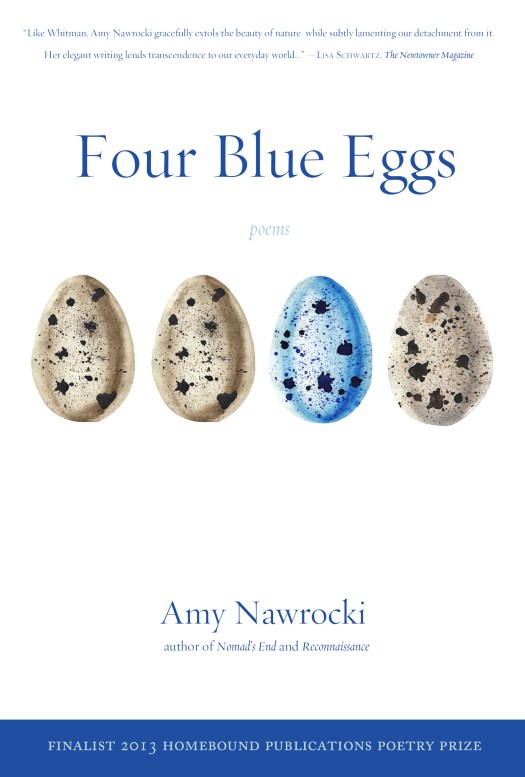
I’ll be reading from Four Blue Eggs and other works at Byrd’s Books in Bethel CT, on Friday, May 18th at 7:00 for part three of Byrd’s Spring Poetry Series.
As the year winds down, I’m looking forward next year’s release of The Comet’s Tail: A Memoir of No Memory. This will be one of two essays released by Little Bound Books, a division of Homebound Publications.
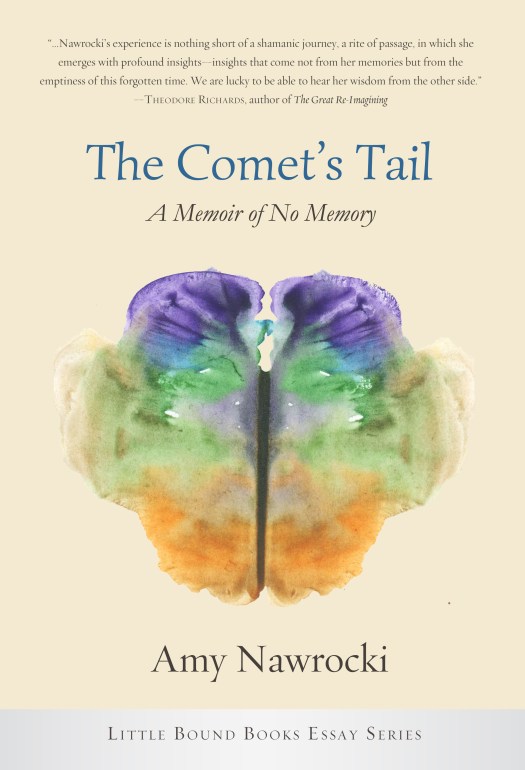
Kirkus calls it “a complex and compelling memoir.” Read the full review here.
As an enticement (Homebound is taking pre-orders), here is “In My Sleeplessness, I Hear an Opera” which is featured in Four Blue Eggs.
In My Sleeplessness, I Hear an Opera
In the beginning, I hear the darkness.
I’m crowded by the soprano’s knowledge
of body rhythms. I see E flat cry.
And then the light bulbs begin to sprout, one
by one, by the side of the stage where all
the presidents line up in order.
I know them by their thunderous tenors
because when eyelids magnetize, I do not
sleep. After that, I pretend I that I lie
in a coffin, my arms folded like white
linen in a closet oddly fitted
to the size of my body. I smell cedar.
But all this time I have been wondering
If my eyelashes have learned how to sing.
A Gathering of Sorts
As morning curdles its way to noontime,
autumn plays its lazy guitar.
To join the living world,
we make our way to the post office
with enough change in hand for three stamps.
Their duty is delivering messages:
a utility bill, the insurance payment, a letter
to a friend. In the front of the line,
a woman’s daughter spins
and spins in her orbit.
Gathering packages in his arms,
a man, Santa-like in tweed jacket
and leather cap, stands beside
a painter covered in plaster.
He sways and looks away
from us, staring instead into
the clouds of his day.
Each day we perform ordinary acts:
we teach algebra, refinance mortgages,
cook dinner, journey to the moon.
Each day a mixture of light and color
penetrates our trust. We place our faith
in little things: the oak’s red summit,
a stamped envelope,
holding the door for each other
as we enter and leave each other’s lives.

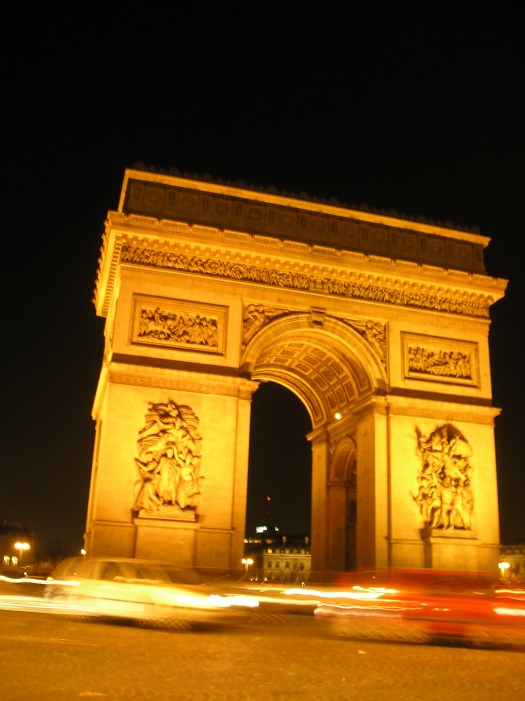
In honor of Eric D. Lehman’s novella Shadows of Paris winning the Silver Medal from Foreward INDIES Book Award, here is my poem from Lune de Miel.
History of a Table
The bar where Henry Miller drank
tenders a thin table beneath a mirrored wall
scoping author’s portraits and patrons who filter
into booths and pout with espresso mouths.
I am only apprenticing Paris. We’ve scrapbooked
ourselves here to dip into the ink of artists like us
who came to loot and ransack the city, to hunt
amid gray, cobbled streets, take the surly and brooding
pelt of phenomenon and deposit a littered alphabet
of new and debaucherous talismans. My pen
trembles, and I ache to write myself into a version
of original sin, revel in the profanity of life,
and spit into my inkwell. Beneath Hemingway
my new husband scribbles in his moleskin.
I fix my eyes toward the ring on his hand.
By the time my cocktail abandons me
I have taken custody of the deserted chronicles
left long ago on tap handles and between floorboards.
My husband closes his book; we leave on the table
a handprint of coins and a pocket of space.
The apprenticeship ends with the looted winter air
sweeping us into the amulet of the Paris night.
 Loch Tay
Between the castle and the Loch—
a long way by car—
we harness wet
shadowless views of fells
and sloped valleys.
Between the bald hills
and our partially cobbled way,
dunes of heather
roll out like quilts over
the bracken-covered
hillocks where sheep graze
quietly, unaware of anything
but the taste of clover and
the crunch of yellowed grass.
While hedges of purple
sprawl across the hilly pass,
the rain only seeks to glisten
the already blurry passing of time.

from our 2011 trip to Scotland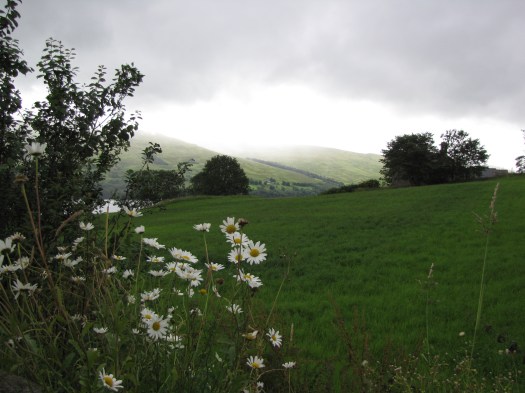
A selection of my poems was recently published in Sixfold journal. Many thanks to the editors and the Sixfold poetry community. Poems are selected by popular vote by multiple readers. With tomorrow’s predicted snowfall, here’s the link and a few teasers:
Waiting for the Plowman
In the morning: Rousseau’s Confessions. Breakfast:
something forgettable and unfulfilling, toast,
the white of an egg circling a shiny yolk.
By midday, the desert of chalk buries the laurel
and watching juncos burrow under the feeder
suffices for motion. Blank under its plastic face
the kitchen dial signals two o’clock with sleek
anemic hands. Within the hour, sugar held
in the spoon’s mouth is let go into black liquid,
and boots, scuffed and sheltered alert the tangled
knit scarf to concoct itself. At four, shovel in hand
I depart to do the job myself. The man
and his truck are nowhere to be found
even though the blizzard’s end is new
and he promised and there is a lot of it.
Lighter than a pile of proverbial feathers
but sticky and heaping, the first bundle I take
begins to build a dune around the driveway
but there is nowhere else to go and no rest
and nothing to do to lessen the white
except to bend at the knees and let it fly.
Literally
She says without irony or modesty
I’m literally so irritated, as if irritation
could be anything other than literal . . .
Bad Girls
The boy at the pub had blonding hair
and a round face
and we were cruel to him. . . .
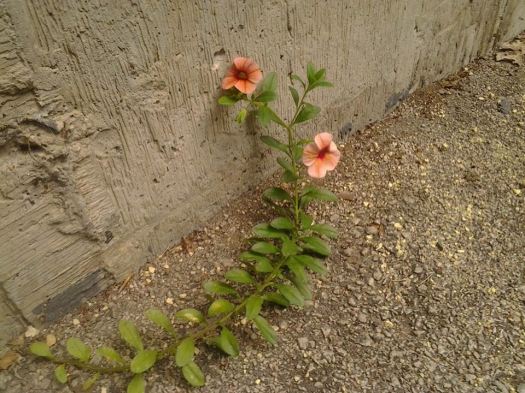
Instead of Poems
Instead of poems, I weed the sidewalk
and empty crevices of intruders.
An indirect homage to How to Eat by Thich Nhat Hanh, to mindfulness, and gratitude to wandering what if, here my the poem that appears as an introduction to A History of Connecticut Food. Indulge mindfully, whatever your indulgences may be.
Hunger
What if the egg
never cracked or the slick moon
of a spoon never borrowed broth
from the blackened kettle
to meet our lips?
What if the apple tree
never shook in a spring storm
or a mantle of snow
never foretold future greens
and silky yellows?
If the cook never tested the pie
or the famished traveler
never asked for seconds,
whose heart would break
with meringue’s collapse
or the steak’s charred crust
folding toward a knife edge?
How would we nourish
our labors if not with
the earth’s capacity to feed us
and the tongue’s aptitude
for savoring?
How would we find
our true selves, spice and all,
without plunging hands
into a mound of dough
or stealing a lick with sloppy fingers?
Who will butter our bread
if not the crepuscular calls
of hunger from which we have
happily never escaped?

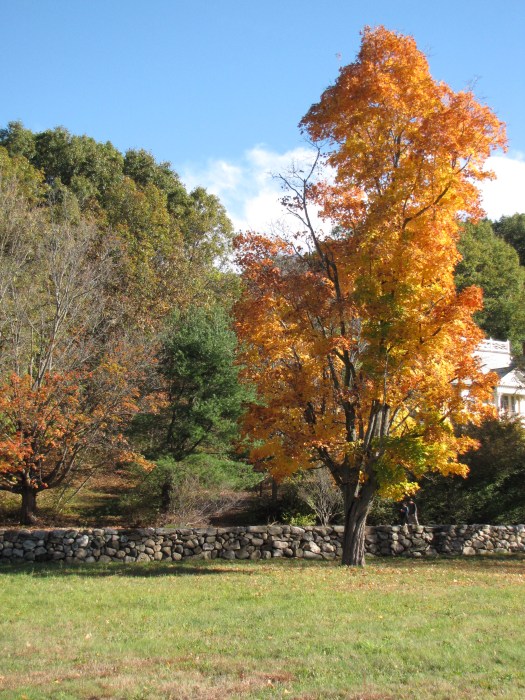
Happy Fall! Here’s a poem from Nomad’s End, published by Finishing Line Press. Purchase a personalized signed copy of the chapbook by clicking here . I’ll pick up the shipping!
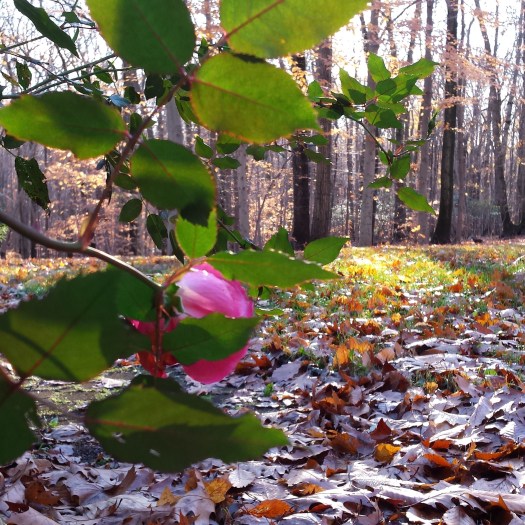
Afternoon on the last day of September
begins with sun shifting across
the tiara of sky. The equinox has passed
and autumn carefully plots
her revenge against the vacancy of summer.
Bulbs await planting, else
the vernal daffodils won’t appear,
and soon the cascade of burnt orange leaves
will need raking. But for now
the lists of unaccomplished tasks
grow like unweeded sprouts
left to frolic in the dormant flower boxes.
Yet we are not entirely idle
and do our own plotting, opening
the screen door, filling the feeder.
Anticipating migration, it dangles
under the porch overhang, filled
with kernels for sparrows and squirrels.
When they exit for afternoon naps,
the feeder flutters in the soft breeze:
a mirror ball, a festival of white patches
kaleidoscoping in a living room lightshow.
The day continues shifting; soon
the dance of light will vanish
as surely as the frost will come,
purposeful in its vocation.
 Amy Nawrocki