
Pickling
. . . everything springs from the deeply plural earth
The pickle exists through the simple act
of preservation. Ever searching for the sea,
we mimic its salinity with a generous dousing
of sodium chloride dissolved in scalding water
and turn the whole thing over to vinegar,
to the chemical beauty of mingling molecules
agitating the turmoil of fermentation.
Whether the tucked leaves of a cabbage head
suck the masala pungency from the brine,
or thin moon slices of magenta beets bleed
from the sting of salt, whether mushroom caps,
round and fortunate, or carrots accosted
with the sweet spice of ginger root savor
the brackishness, everything springs
from the deeply plural earth. We store
the marinated concoction and thus safeguard
our futures, stave off our own rotting,
preserve all that is ancient and worthwhile
into one crisp bite of vegetable love.
Waking Up to the Earth–Aboriculture
One Hundred Degrees of Plum
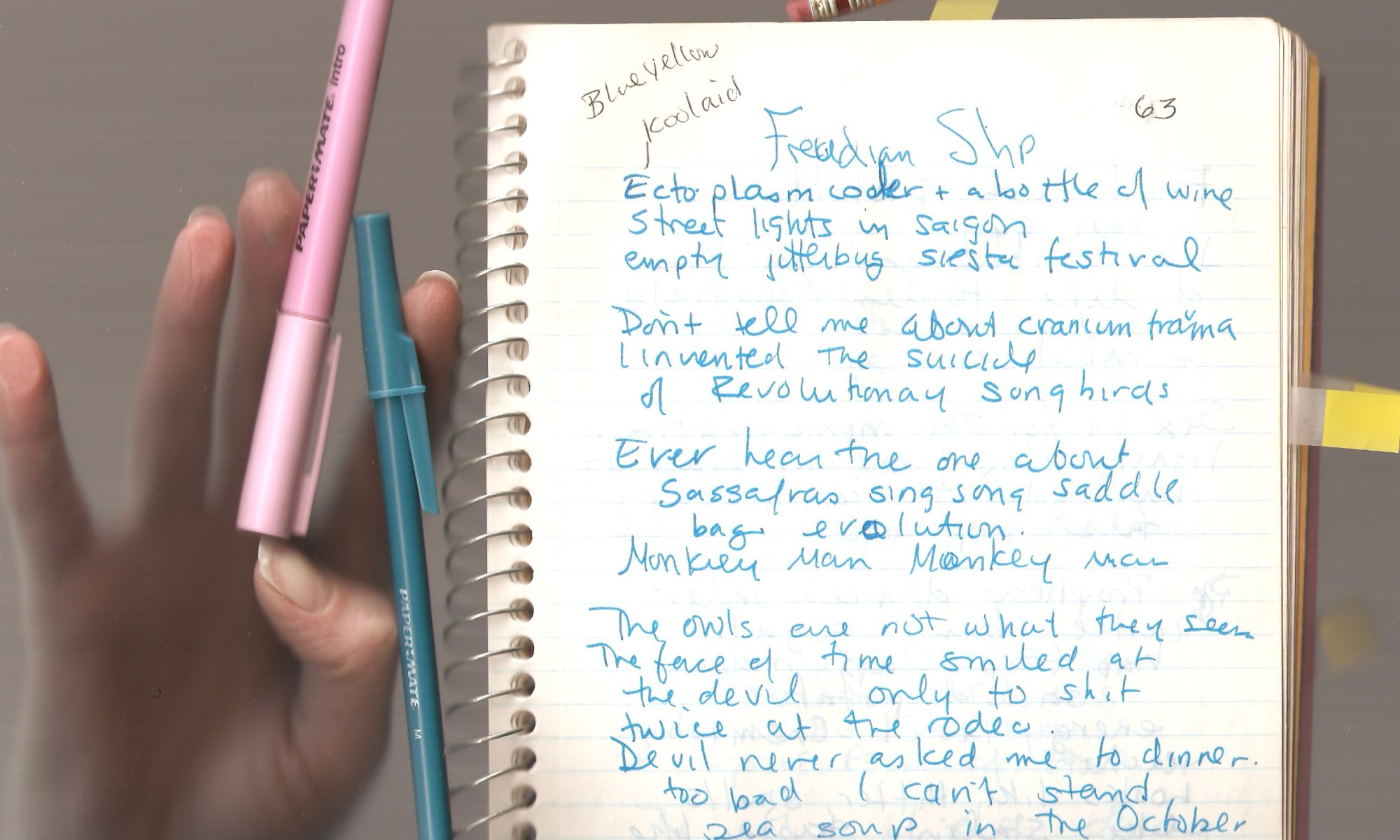
Two Poems for My Veins
Infusion
If I had to choose
between snakes’ fangs
and tigers’ claws
to name the needle
piercing my flesh
I select the cat
whose stripes burrow
all the way to skin
because this hunt—
dangerous as an open wound—
leads the seeker
to my blood
and the venom
is already present.
from Mouthbrooders, Homebound Publication, 2019

Generous Bruises
At the bank the teller catches me
counting on my fingers—the same feeling
I had chasing my sister’s bike down
the unpaved road. She would fall before
I could catch her. As the road curved
I was thinking how little I have
to rely on; I should run faster.
Caught in the act of failing, used up again
dwelling in those Hopper paintings
where nothing vacillates, nothing
is weak, and all the women wear black pumps.
Their isolation—so original, it makes them
efficient, but keeps them separate.
But consider this: a crystal’s structure
appears only when cracked. We experience
the same self when the I cracks
and our breath runs out. We earn
the favor of being by breaking
revealing a symmetry so generous it bleeds.
Watching a bruise heal from the inside out
it’s the color that matters:
never black nor blue, but shades of yellow
and one hundred degrees of plum.
from Four Blue Eggs, Homebound Publications, 2017

because they lied
the ones who promised . . .
uprooted
Wanting to be seeded
into the perennial world, the poet
seeks the counsel of tiger lilies.
from Mouthbrooders

Of Kites and Cohen
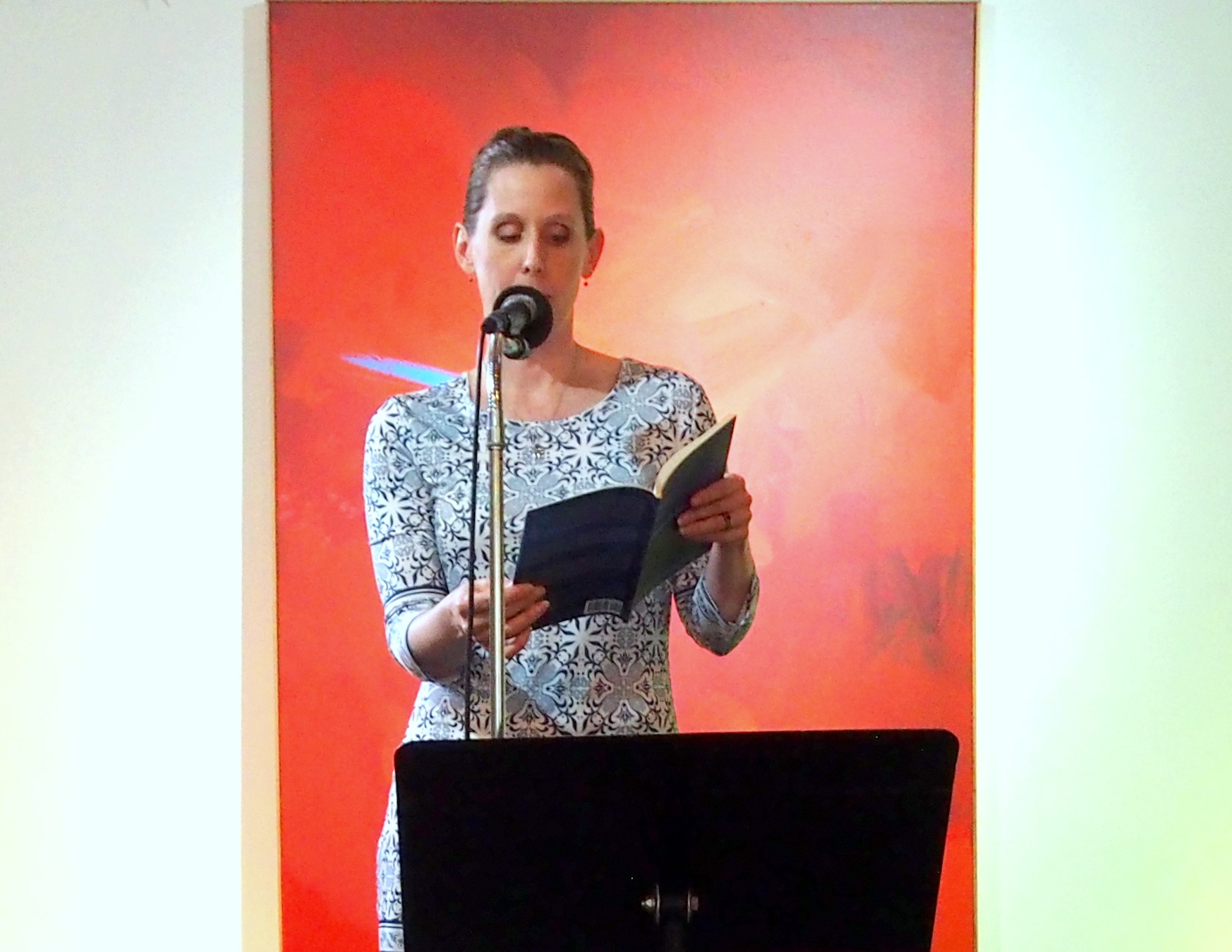
I recently led a discussion about the poetry and lyrics of Leonard Cohen at the Bethel, CT, Public Library. The program was sponsored by Bethel Poet Laureate Cortney Davis. In the talk, I centered on intimacy and audience in Cohen’s work, how in poetry and song he can draw his readers (and listeners) in through both a literary voice as well as a his “reedy baritone” singing voice. In the case of his poetry, I found intimacy was created through imagery, organization of stanzas and lines, and point of view. Cohen often addresses the reader directly (not an uncommon practice of second person), but doing so seems to grant him authority (“A kite is a victim you can be sure of”) even as the speaker struggles with the surety of this: “A kite is the last poem you’ve written/ so you give it to the wind.” The “you” in the poem is both the speaker and the reader, and thus confirms this “contract of glory / that must be made with the sun” through us, the reader.
We weren’t able to get to all the poems I had selected to talk about. So “A Kite is a Victim” is for everyone who attended yesterday’s discussion who helped me release Leonard Cohen’s kite, finding it among friends in “the fields / the river, and the wind.” Perhaps now I too will be “lyric, and worthy, and pure.”
Words, words, words
The poem began as a class exercise. My students were experimenting with fixed and traditional form poems. I gave them the option of trying a villanelle or a sestina. Some had trouble getting started, so I offered a few images that they could pool from. We had discussed the form and how repetition functions differently in each of these forms. The sestina incorporates repeated end words–words at the end of the line–in a pattern of six line stanzas. A “map” or chart is helpful, and I gave them handouts and examples to follow. As they worked, I asked each student for one word–my aim was to use their words, fixed in a pattern of the sestina. I also had in mind a debate about whether or not a pattern can overwhelm a poem and another debate about how meaning functions in the realm of pattern. Big questions for a 75 minute class.
In the end, I had about 20 words, which I wrote down in order, then supplemented to create six word lines which I then formed into six line stanzas. The exercise challenged me to see how word choice leads pretty naturally to syntax and a need to find meaning not only in words, but in phrases. Beyond that, the challenge was to vary the lines enough so that the repetition (already expected in the sestina form) wouldn’t overwhelm or underwhelm the poem. As I wrote, the fun was in rearranging in interesting ways for sound, then meaning. As I read and recorded the poem, the fun was in managing my voice, the cadence, the pronunciation and articulation of each word and each line. This made me think more about punctuation choices as well as line breaks (enjambing and endstopping–or not).
Whether the poem has logic or “meaning” is now up to the listener. For me, I enjoyed the practice, but I mostly enjoyed that the words were given by my students, and in a way, it’s their poem.
Explicating the Poetic Process
“My writing process saves a fair percentage of time
for self-doubt and lack of artistic confidence.”
It starts with an encounter. There is a notarized mammal, a dead serpent, and a preserved misspelling. Then a mythical flash of inspiration, the grabbing for tool and template, and the clumsy yet magical act of documentation. Just like the muses prophesized. Read more:

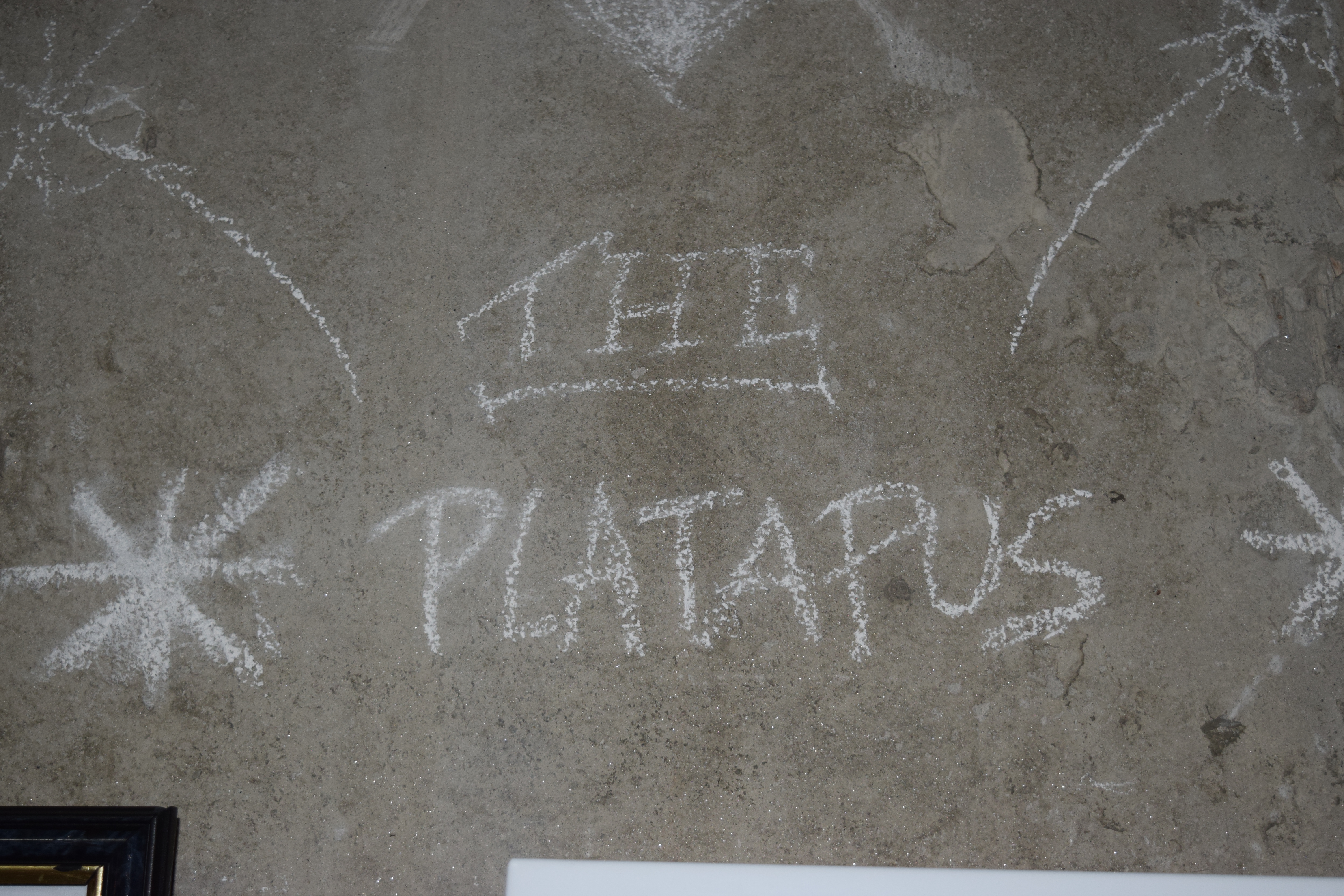
More often than not, the process begins with a mistake.
This feature appeared in the May 14 2018 issue of Woven Tail Press‘s website.
Upcoming release: Mouthbrooders–ready for pre-order

My new collection, Mouthbrooders, is ready to go to the printer for release in June. Order your copy and support Homebound Publications and get a 20% discount.
 Amy Nawrocki