Book Club

Here is an invitation to the books you are about to order: “Book Club”  appears in Four Blue Eggs, which is now conveniently available directly from me. Find the “Buy Now” on the “Purchase Signed Copies” menu tab. Pull up a chair, grab a cup of tea, and make your purchase (through PayPal) today. I’ll be happy to personalize messages and get your copy to your mailbox asap.

Book Club

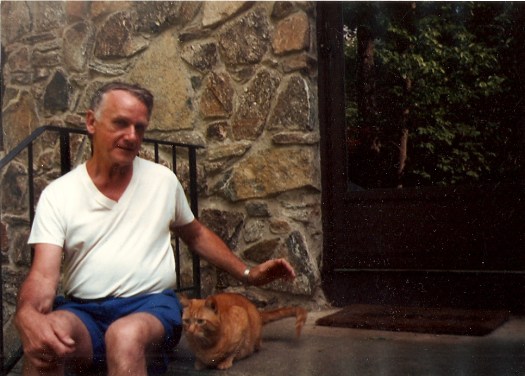
In the months before my father died
he joined a half-dozen mail-order book clubs.
The hard backs with their sturdy resolve
arrived week after week
as his own pages dissolved in vinegar.
After, the packages clogged the front step,
waiting for idle new eyeglasses, waiting
for a heart, bruised and bypassed,
to decipher conquests and romances,
to find that it was not unlike others—
full of the blood that would betray it.

I pull up to the long driveway
and find, rubber-banded to the post,
this month’s arrival—The Oxford
Companion to World Mythology.
Instead of scribbling cancel
on the invoice, I crack the spine
in order to breathe in the crisp pages,
to decipher the stories that will have to fill
the spaces where my own heart failed.

As always, you can also buy unsigned copies and e-books through Homebound Publications. Add a couple other titles to your cart while you’re at it.
dad w nikkiIMG_20140106_151723

34 km from Paris

To celebrate the forthcoming publication of my husband Eric D. Lehman‘s novella Shadows of Paris, I’m posting this poem, not of Paris exactly, but when you read Shadows, you’ll know why this poem makes sense. The characters in his beautifully crafted story also “know something of transformation,” but that’s all I’ll say. You should discover it for yourself. Make your pilgrimage to Homebound Publications and buy your copy. Click again to get  Lune de Miel, where this poem first appeared.

Pilgrim at Auvers
The pigeons at L’eglise Notre Dame know something
of transformation. White broods in a sky that has forgotten
color and the silhouette of clouds. A quiet stroll
through narrow, charcoal streets led me here,
up ancient stone steps to the church where Vincent
van Gogh saw blue-black sky churn in flight around
the toasted edifice. The flock perches until the hint
of something migratory and innate calls them to stir;
in hues of gray they erupt in a smooth arc, returning
to roost on the slants of the high, tilted steeple.
Winter weighs endurance and transition as stone erodes
to dust, leaves compost to mud, and summer flowers
that steadily surveyed August afternoons convert
to dried stalks in frozen dirt. Pilgrims, too, know of shifts
and I walk into the warm and lonely church to wait
for language to come again to my cold lips.
Fifteen hundred hours toll from the bell tower,
a grave listens at the top of the hill, and a downcast sun
aches to paint maize onto the bare winter scroll.

“It would be easier . . . “

Here’s a poem that appeared in Reconnaissance, published by Homebound Publications in 2015.

Long Shot

A good snapshot stops a moment from running away.      ~Eudora Welty

The dilemma is not
about choosing between
architecture or faces,
panorama or close-up,
indirect light or flash

but between
the print’s future frame
and the quiet immobility
of reflection—of just sitting
and being, not worrying
about whether any of this
will be preserved digitally
and remembered in twelve
or thirteen years. Chances are,

tomorrow I will struggle
with recreating the bird
swaggering near my feet. Maybe
in some somnambulant day dream,
I’ll re-see these tiny
daisy-like weeds and hear
the passersby crunch gravel
under lazy sneakers. I might
be able to gather pieces
of foil and flattened cigarettes
from a mind cluttered
with fading poppies
and the leaves of a tree
I cannot name
blowing in a breeze.

It would be easier
if I didn’t love
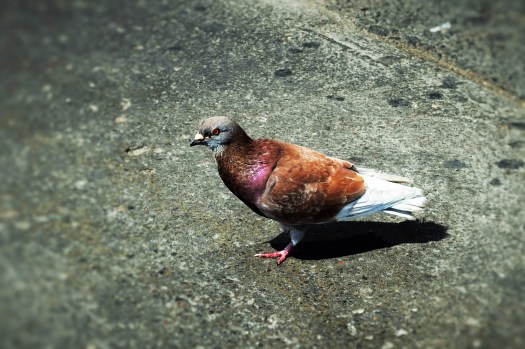
every single pigeon, this one
with his spooky eyes and orange beak—
a single brushstroke
of white and teal beneath his neck,DSC_0294

and if the fence’s shadow
wasn’t so dappled and transient,
if acorns would stop falling
mid-distance between dawn
and dusk, long enough
to preserve their posts
in my mind. If forgoing
the shot and closing my eyes
would be enough to argue against

some future self
who will be too old or sad
or something worse
to remember this.

Check out these other great titles from Homebound Publications including new fiction by L.M. Browning  and Eric D. Lehman, poetry by Andrew Jarvis and James Scott Smith, illustrated children’s literature by Elizabeth Slayton, and nonfiction by David K. Leff.  Add Four Blue Eggs and Wildness: Voices of the Sacred Landscape to your book bag and you’ll be set (for a while)! Support independent publishers and writers who want to make a difference in the world. Save 20% and receive free shipping on orders over $35.00 with coupon code: SUMMERREADING20.


A Gathering of Sorts


IMG_0469A Gathering of Sorts

As morning curdles its way to noontime,
autumn plays its lazy guitar.
To join the living world,
we make our way to the post office
with enough change in hand for three stamps.
Their duty is delivering messages:
a utility bill, the insurance payment, a letter
to a friend. In the front of the line,
a woman’s daughter spins
and spins in her orbit.
Gathering packages in his arms,
a man, Santa-like in tweed jacket
and leather cap, stands beside
a painter covered in plaster.
He sways and looks away
from us, staring instead into
the clouds of his day.

Each day we perform ordinary acts:
we teach algebra, refinance mortgages,
cook dinner, journey to the moon.

Each day a mixture of light and color
penetrates our trust. We place our faith
in little things: the oak’s red summit,
a stamped envelope,
holding the door for each other
as we enter and leave each other’s lives.

Click the title to find Potato Eaters, where this poem first appeared.

IMG_9092

There are, of course, flowers

Reconnaissance yields a bouquet of Quebecois forest flowers for a hot summer day. Un-vase the garden.

Photos from Parc National D’Oka, and Montreal Botanical Gardens

Poem from Reconnaissance, Homebound Publications, 2015

Mrs. Dalloway

There are, of course, flowers;
they fill her hands before any vase,
but even in their glass tomb, she sees
the void they have lent their lives to.
Once the guests arrive, she sinks
between the desire for the most
satisfying success and the deep
and heeding certainty that none of it
prevents the day’s observable artifacts
from passing through the clear,
choking air of an open window.


Threads

20160615_191012

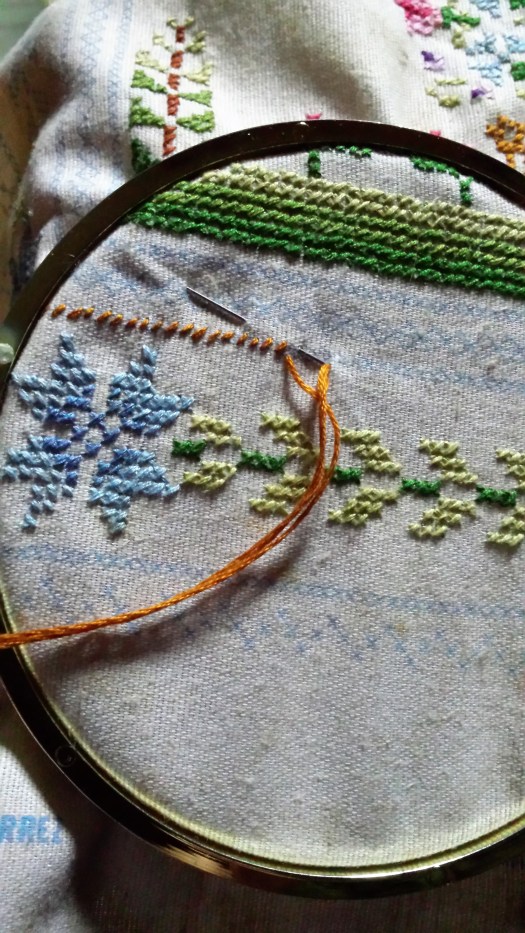
This unfinished cross-stitch tapestry was started (I think) by my mom in 1977. That’s the date stamped on the pattern. I rescued the unfinished project from the old house in one of the many clean-out sessions, found in a walk-in closet along with many other sewing materials, loose fabric swatches, patterns and pincushions, scissors and embroidery floss. It’s been in my closet ever since. The center was finished (a sampler with alphabet and numbers) and about a fourth of the border had already been stitched. The shadow of her original embroidery hoop makes a distinct age mark; it’s gone now, but the needle was left in this position. My suspicion is that she never finished it because in 1978 she gave birth to her fifth child–Erick. She also began to do more quilting and stenciling by then, so her art projects shifted. I hope to finally finish it in time for the birth of her second grandchild, Erick and Shelby’s baby due in September.

Threads

Opening the walk-in closet filled
with the stuff of living—I think
one day we will have to sell the house.
In the meantime, closing the door
as a hatbox falls, there are no poems
about choosing the appropriate dress
for your mother to be cremated in.

As a schoolchild, I learned
when there is anything left over
you must carry it. I’m taught to love
what lingers—the timpani in a slow concerto,
the echo of a lost voice,
the sound, three rooms away
of a breath stopping on its last chord.
Paying its debt, nighttime
closes its eyes and gives itself up
to morning. I think she is sleeping,
so best let her sleep. Keep the cat
from waking her.

I recognize my mother’s hands
on the walls of our house. These are her threads;
the threads I hold onto as I make my way,
always there is a path back.

My first act as an orphan: I choose
the sapphire dress, the best color I know
depicting the moon’s shadow
as it spirals away from the earth.

Before Your Train Leaves

A poem from Nomad’s End, published by Finishing Line Press, 2010.


IMG_20130602_134814 (2)

Before your train leaves

a handful of minutes need to morph
into their shape, crust like atoms
becoming a molecule and tell a story
with thrift. No time to dawdle.
Back-story, established by your eyes,
advances the plot, though I am more interested
with the syllables of touch than
the tactility of speech. We pool
into the sparse bed and handle
each other like pottery clay, mold ourselves
into familiar shapes. I smooth
your back as moments hoof between
the walls of the room. They assemble
in the sphere of a clock above our heads.
Before your train leaves, the hands
will complete their circle; our story
will end as most do, with goodbyes
filling the grooves between scripts.

The Beauty of Faces

Babci’s recipe, mom’s hands, Amy’s poems.


Babka

I eat the bread with raisins and some butter
remembering how I first learned to knead it.
My mother’s hands would shape the bread

in careful mounds, the counter floured
in a dusting, light as graying memory.
I mix the dough with raisins and some sugar

moving the moist glob with my hands.
She’d warn me not to knead too gently,
her hands would show me how the bread

should give and tug, like elastic,
then surrender; let the yeast begin
to tease the bread with flavor and some nurture.

Standing in the kitchen, the light streams in;
the heat takes over with deft precision,
my mother’s hands would ease the bread

into awaited sleep. She tells me now
to let it sit, give it time, watch it rise.
I eat the bread with raisins and some butter.
I long to see her hands rising in my own.

~published in Potato Eaters, Finishing Line Press, 2008


The Beauty of Faces

We hold tightfisted to the beauty of faces
because photographs have no sound
unless we tap into the orchestra behind them,
try to hear the family’s voices piped
and whistling the day they were recorded
as we can only imagine how glaciers
moving in and out of the landscape
create sound spacious enough to crack
the horizon. So, too, the hiss and spit
of the northern lights must be dreamed
because our ears are inefficient
as old telegraph wires.

So the house
on South Colony Street carries
children’s laughter up the front stairway
sloping toward the kitchen
where Josephine’s peeled oranges hum
like music from the Victorola
filling the heart with remembrance and history,
pulling toward a place called home.

~published in Four Blue Eggs, Homebound Publications, 2014


Second Thoughts

OLYMPUS DIGITAL CAMERA

Second Thoughts

Birches with peeling bark
root with certainty in the spring soil
while the ifs
of the inorganic world outshine
the quiet, sun-soaked solitude.
Stretching on a lazy rock,
I manufacture thoughts and watch them
roam like hawks, settling
now and then on rabbits, mice,
the occasional thesis.

A balmy spring wind flaps
the empty pages of an untold tale
like parade flags waving at bystanders.
If I stay long enough
the paper will yellow and parch,
and if the wind stops, my eyes
will ambush the conclusion.

IMG_20150621_153314IMG_3060


Wildness: Voices in the Sacred Landscape

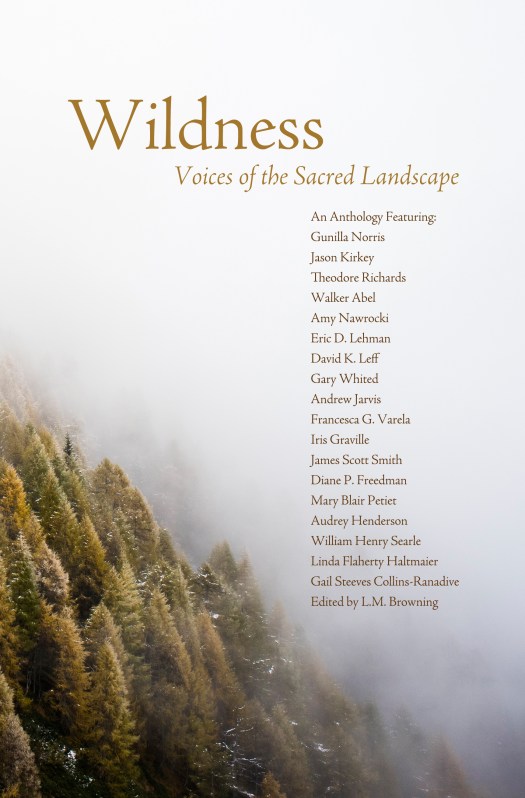
Check out this great new anthology. In celebration of the 5th anniversary of its founding, Homebound Publications is pleased to announce the publication of Wildness: Voices of the Sacred Landscape, featuring 19 authors including David K. Leff, L.M. Browning, Gunilla Norris, Theodore Richards, Gary Whited, Eric D. Lehman, and me.

Anthology_cover_fin

Here’s a teaser from my essay “Choosing Peregrine.”

This peregrine is not too much bigger than a crow or mourning dove, but unmistakable, once I finally find her in my assisted gaze. We piece together the story.

Support Homebound, an independent, socially and environmentally conscious publisher. Purchase your copy today. Celebrate beauty; choose love. Be kind.

erics wildness quote