What if? Ode to hunger

An indirect homage to How to Eat by Thich Nhat Hanh, to mindfulness, and gratitude to wandering what if, here my the poem that appears as an introduction to A History of Connecticut Food. Indulge mindfully, whatever your indulgences may be.

Hunger

What if the egg
never cracked or the slick moon
of a spoon never borrowed broth
from the blackened kettle
to meet our lips?

What if the apple tree
never shook in a spring storm
or a mantle of snow
never foretold future greens
and silky yellows?

If the cook never tested the pie
or the famished traveler
never asked for seconds,
whose heart would break
with meringue’s collapse
or the steak’s charred crust
folding toward a knife edge?

How would we nourish
our labors if not with
the earth’s capacity to feed us
and the tongue’s aptitude
for savoring?

How would we find
our true selves, spice and all,
without plunging hands
into a mound of dough
or stealing a lick with sloppy fingers?

Who will butter our bread
if not the crepuscular calls
of hunger from which we have
happily never escaped?

DSC_0681

Upcoming Events

October 8, 2016

Join me, Marilyn Nelson and Eric D. Lehman at Byrd’s Books in Bethel Connecticut for a Poetry and Fiction reading.

November 29, 2016

I’ll be reading at the Connecticut Forest and Park offices in Middlefield, CT at 7:00 p.m. This is the kick-off event and the inauguration of the trail’s new Poet Laureate David K. Leff. Joining David will be Connecticut Poet Laureate Rennie McQuilkin.


Not entirely idle

Happy Fall! Here’s a poem from Nomad’s End, published by Finishing Line Press. Purchase a personalized signed copy of the chapbook by clicking here . I’ll pick up the shipping!

img_20151121_102544

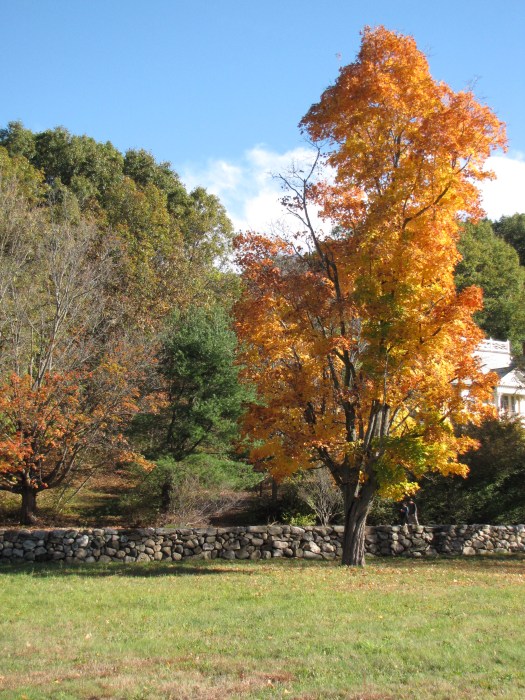
Occupation of Autumn

Afternoon on the last day of September
begins with sun shifting across
the tiara of sky. The equinox has passed
and autumn carefully plots
her revenge against the vacancy of summer.
Bulbs await planting, else
the vernal daffodils won’t appear,
and soon the cascade of burnt orange leaves
will need raking. But for now
the lists of unaccomplished tasks
grow like unweeded sprouts
left to frolic in the dormant flower boxes.

Yet we are not entirely idle
and do our own plotting, opening
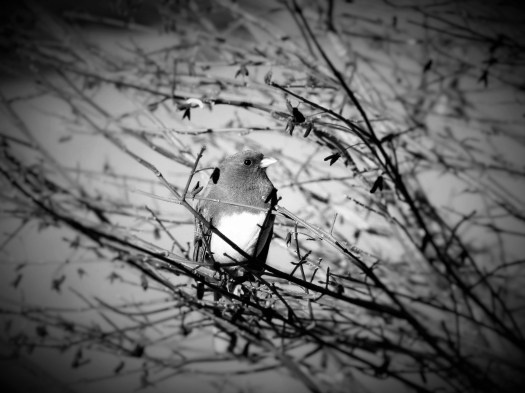
the screen door, filling the feeder.
Anticipating migration, it dangles
under the porch overhang, filled
with kernels for sparrows and squirrels.
When they exit for afternoon naps,
the feeder flutters in the soft breeze:
a mirror ball, a festival of white patches
kaleidoscoping in a living room lightshow.
The day continues shifting; soon
the dance of light will vanish
as surely as the frost will come,
purposeful in its vocation.

img_6090

Moon Birds


For the first assignment in Poetry 205, we listened as students shared a poem they loved or one that inspired, intrigued or interested them in some way. The assignment was to listen and jot down any word or phrase that struck your ear and then write a poem from the fragments. I had  a list of over a hundred phrases from poems and this is the end result:


Moon Birds


any gods
who dare to claim the sky

take sorrow
with open throats

leave chalk white arrows
and nothing more


img_3599-2

Black Sheep Reflections

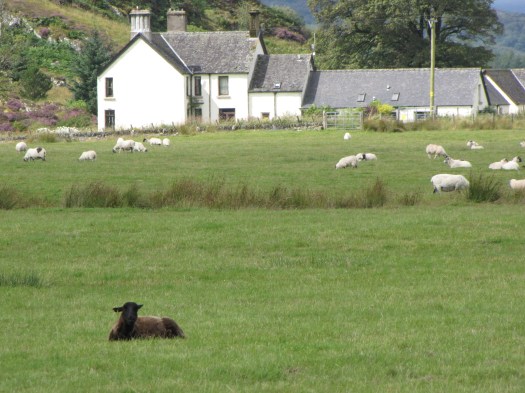
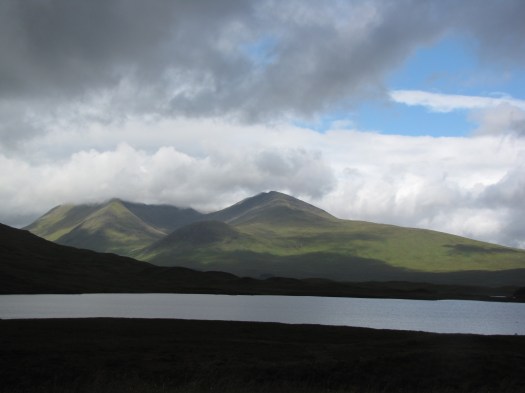
Five years ago about this time, Eric and I were on our way back from Scotland. We didn’t take in the entire West Highland Way on foot as planned, but our black sheep guides (all of them) deserve a whiskey toast.

To Leave Is One Thing

By the time we get back to Glasgow
the thistle has turned cottony
and the black sheep who has been our guide
rests quietly, dinned wheels and muddied
exterior, in the parking lot of Arnold Clark’s car hire.

IMG_9409

On the Erskine Bridge, traffic stops
for a suicide, but we are not sad, not really.
To leave is one thing, to depart
without experience sewn into muscle and mind
would be too much.

The cabbie’s loud music turns into an opportunity.
As we approach the airport
we fill our minds of all that came before:

Central Station from the hotel window,
the Highlands materializing through the rain.
Stirling Castle and the cobbled way
toward Aberfeldy. Maple scarf marriage
and the Fortingall Yew. Haggis and scones,
bens, bogs, and roundabouts. Humming
Loch Lomond, and stealing Skye
from Clan Donald. Putting our feet down,
imagining there is no pain.

For nights to come we will dream of thistles.

IMG_9497IMG_9579

34 km from Paris

To celebrate the forthcoming publication of my husband Eric D. Lehman‘s novella Shadows of Paris, I’m posting this poem, not of Paris exactly, but when you read Shadows, you’ll know why this poem makes sense. The characters in his beautifully crafted story also “know something of transformation,” but that’s all I’ll say. You should discover it for yourself. Make your pilgrimage to Homebound Publications and buy your copy. Click again to get  Lune de Miel, where this poem first appeared.

Pilgrim at Auvers
The pigeons at L’eglise Notre Dame know something
of transformation. White broods in a sky that has forgotten
color and the silhouette of clouds. A quiet stroll
through narrow, charcoal streets led me here,
up ancient stone steps to the church where Vincent
van Gogh saw blue-black sky churn in flight around
the toasted edifice. The flock perches until the hint
of something migratory and innate calls them to stir;
in hues of gray they erupt in a smooth arc, returning
to roost on the slants of the high, tilted steeple.
Winter weighs endurance and transition as stone erodes
to dust, leaves compost to mud, and summer flowers
that steadily surveyed August afternoons convert
to dried stalks in frozen dirt. Pilgrims, too, know of shifts
and I walk into the warm and lonely church to wait
for language to come again to my cold lips.
Fifteen hundred hours toll from the bell tower,
a grave listens at the top of the hill, and a downcast sun
aches to paint maize onto the bare winter scroll.

A Gathering of Sorts


IMG_0469A Gathering of Sorts

As morning curdles its way to noontime,
autumn plays its lazy guitar.
To join the living world,
we make our way to the post office
with enough change in hand for three stamps.
Their duty is delivering messages:
a utility bill, the insurance payment, a letter
to a friend. In the front of the line,
a woman’s daughter spins
and spins in her orbit.
Gathering packages in his arms,
a man, Santa-like in tweed jacket
and leather cap, stands beside
a painter covered in plaster.
He sways and looks away
from us, staring instead into
the clouds of his day.

Each day we perform ordinary acts:
we teach algebra, refinance mortgages,
cook dinner, journey to the moon.

Each day a mixture of light and color
penetrates our trust. We place our faith
in little things: the oak’s red summit,
a stamped envelope,
holding the door for each other
as we enter and leave each other’s lives.

Click the title to find Potato Eaters, where this poem first appeared.

IMG_9092

Threads

20160615_191012

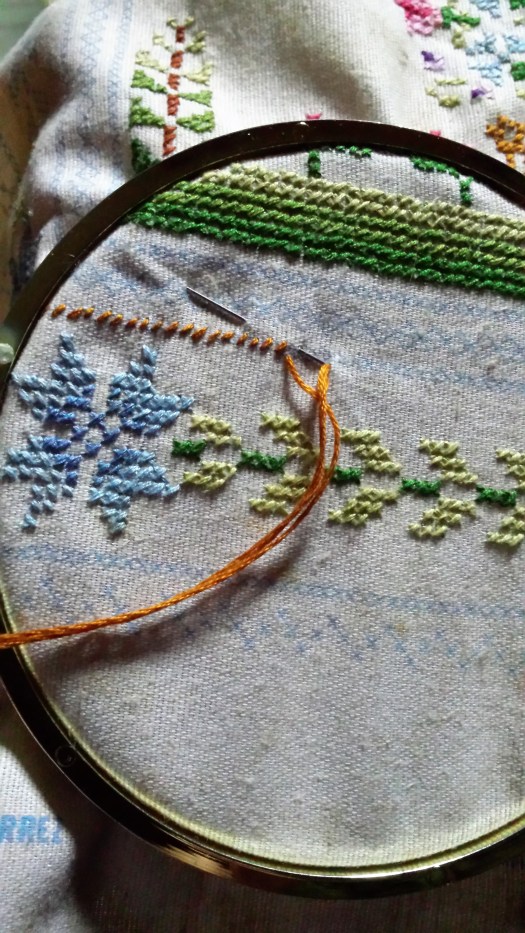
This unfinished cross-stitch tapestry was started (I think) by my mom in 1977. That’s the date stamped on the pattern. I rescued the unfinished project from the old house in one of the many clean-out sessions, found in a walk-in closet along with many other sewing materials, loose fabric swatches, patterns and pincushions, scissors and embroidery floss. It’s been in my closet ever since. The center was finished (a sampler with alphabet and numbers) and about a fourth of the border had already been stitched. The shadow of her original embroidery hoop makes a distinct age mark; it’s gone now, but the needle was left in this position. My suspicion is that she never finished it because in 1978 she gave birth to her fifth child–Erick. She also began to do more quilting and stenciling by then, so her art projects shifted. I hope to finally finish it in time for the birth of her second grandchild, Erick and Shelby’s baby due in September.

Threads

Opening the walk-in closet filled
with the stuff of living—I think
one day we will have to sell the house.
In the meantime, closing the door
as a hatbox falls, there are no poems
about choosing the appropriate dress
for your mother to be cremated in.

As a schoolchild, I learned
when there is anything left over
you must carry it. I’m taught to love
what lingers—the timpani in a slow concerto,
the echo of a lost voice,
the sound, three rooms away
of a breath stopping on its last chord.
Paying its debt, nighttime
closes its eyes and gives itself up
to morning. I think she is sleeping,
so best let her sleep. Keep the cat
from waking her.

I recognize my mother’s hands
on the walls of our house. These are her threads;
the threads I hold onto as I make my way,
always there is a path back.

My first act as an orphan: I choose
the sapphire dress, the best color I know
depicting the moon’s shadow
as it spirals away from the earth.

The Beauty of Faces

Babci’s recipe, mom’s hands, Amy’s poems.


Babka

I eat the bread with raisins and some butter
remembering how I first learned to knead it.
My mother’s hands would shape the bread

in careful mounds, the counter floured
in a dusting, light as graying memory.
I mix the dough with raisins and some sugar

moving the moist glob with my hands.
She’d warn me not to knead too gently,
her hands would show me how the bread

should give and tug, like elastic,
then surrender; let the yeast begin
to tease the bread with flavor and some nurture.

Standing in the kitchen, the light streams in;
the heat takes over with deft precision,
my mother’s hands would ease the bread

into awaited sleep. She tells me now
to let it sit, give it time, watch it rise.
I eat the bread with raisins and some butter.
I long to see her hands rising in my own.

~published in Potato Eaters, Finishing Line Press, 2008


The Beauty of Faces

We hold tightfisted to the beauty of faces
because photographs have no sound
unless we tap into the orchestra behind them,
try to hear the family’s voices piped
and whistling the day they were recorded
as we can only imagine how glaciers
moving in and out of the landscape
create sound spacious enough to crack
the horizon. So, too, the hiss and spit
of the northern lights must be dreamed
because our ears are inefficient
as old telegraph wires.

So the house
on South Colony Street carries
children’s laughter up the front stairway
sloping toward the kitchen
where Josephine’s peeled oranges hum
like music from the Victorola
filling the heart with remembrance and history,
pulling toward a place called home.

~published in Four Blue Eggs, Homebound Publications, 2014


Second Thoughts

OLYMPUS DIGITAL CAMERA

Second Thoughts

Birches with peeling bark
root with certainty in the spring soil
while the ifs
of the inorganic world outshine
the quiet, sun-soaked solitude.
Stretching on a lazy rock,
I manufacture thoughts and watch them
roam like hawks, settling
now and then on rabbits, mice,
the occasional thesis.

A balmy spring wind flaps
the empty pages of an untold tale
like parade flags waving at bystanders.
If I stay long enough
the paper will yellow and parch,
and if the wind stops, my eyes
will ambush the conclusion.

IMG_20150621_153314IMG_3060