Inside the Confessional

A selection of my poems was recently published in Sixfold journal. Many thanks to the editors and the Sixfold poetry community. Poems are selected by popular vote by multiple readers. With tomorrow’s predicted snowfall, here’s the link and a few teasers:

Waiting for the Plowman
In the morning: Rousseau’s Confessions. Breakfast:
something forgettable and unfulfilling, toast,
the white of an egg circling a shiny yolk.

By midday, the desert of chalk buries the laurel
and watching juncos burrow under the feeder
suffices for motion. Blank under its plastic face

the kitchen dial signals two o’clock with sleek
anemic hands. Within the hour, sugar held
in the spoon’s mouth is let go into black liquid,

and boots, scuffed and sheltered alert the tangled
knit scarf to concoct itself. At four, shovel in hand
I depart to do the job myself. The man

and his truck are nowhere to be found
even though the blizzard’s end is new
and he promised and there is a lot of it.

Lighter than a pile of proverbial feathers
but sticky and heaping, the first bundle I take
begins to build a dune around the driveway

but there is nowhere else to go and no rest
and nothing to do to lessen the white
except to bend at the knees and let it fly.

Literally

She says without irony or modesty

I’m literally so irritated, as if irritation

could be anything other than literal . . . 

Bad Girls

The boy at the pub had blonding hair

and a round face

and we were cruel to him.  . . .

Instead of Poems

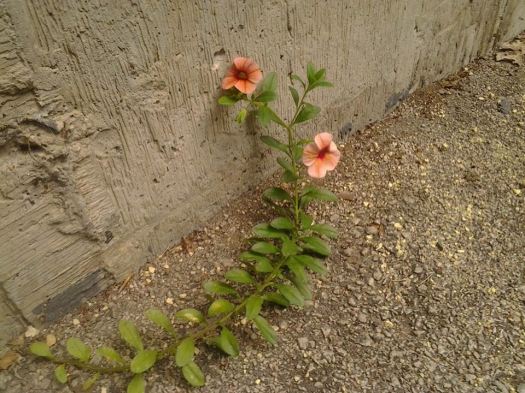
Instead of poems, I weed the sidewalk

and empty crevices of intruders.

sidewalk petunias

Gratitude

Gratitude


If we could have read the moon’s face
through the falling snow
that night we drove into its absent shadow,
it would have told us that the cold
sometimes melts things, too.
The train station, under hazy yellow lights,
fills with travelers arriving for Christmas.
We drive home with our father,
a faint smile crooked in the low end of his mouth.
Because the road hides so much,
more than once, Dad mentions black ice
the way he’d repeat an argument
until we understood. But when the car,
spins momentarily toward the guard rail,
he anchors us—and we are held
by his steadiness, which, for so many years,
we mistook for other things—
discipline, scolding, but mostly anger.
It’s time now to take this lesson
and file it safely under black ice,
reluctant blessings, how our father,
silver haired and breathing slowly,
saves his children’s lives yet again.

A poem from Four Blue Eggs, images from London

Is poetry too hard? Amy Nawrocki, Hamden poet, gives a resounding NO and explains why

Preparing for tomorrow’s class, I remembered this essay from 2012 posted on Books New Haven:

Why are people so afraid of poetry? That’s a question that’s been plaguing poet Amy Nawrocki, of Hamden. Now, with her new collection, Lune de Miel, being released in August, she talks …

Source: Is poetry too hard? Amy Nawrocki, Hamden poet, gives a resounding NO and explains why

Copies of Lune de Miel, which came out in 2012 can be purchased by clicking the tab: Purchase Signed Copies.

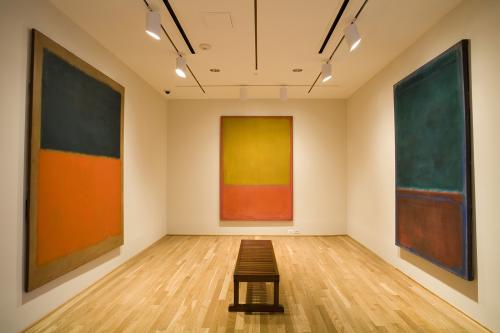
The Rothko Conundrum

20170109_123104Many thanks to a little boy named Ezra (and his expert crocodile tears) and Mark Rothko for filling my time at AAA as I waited to get my new 44-year-old license. I have to admit that it felt a little awkward giving up on Lucretius, who got me through a registration renewal at the DMV last year. But Rothko’s The Artist’s Reality: Philosophies of Art gave me encouragement: 
“The Truth of Art is foremost. . . . This artistic conscience, which is composed of present reason and memory, this morality intrinsic to the generic logic of art itself, is inescapable” (“The Artist’s Dilemma,” chapter 1)

Thus, musings from Reconnaissance:
The Rothko Conundrum
—the Phillips Collection
1.
binary hypothesis
recognizable. a door
two mirrors. eight cauldrons
a house with its roof
green wishing away a marooned horizon

a blood puddle laying
on the upturned walkway
the puddle pretending a dance
the mirror between

2.
an upside-down paragraph
hapless bronze fire
waking the vertical

bottle glass wishing away a citrus horizon
unfinished books. the last pieces
of paper left on the floor
perpendicular mischief

3.
lost fish music. horizontal longing. orange and red on red
wishing away a missing horizon
lost in watertight cathedral windows
burdenless aches. plurality

the singular capture of loss
knowing or not knowing the ending

4.
the house next door
a second window, serenity
ochre hallelujahs caught
on the windowsill
kneeling inside emptiness
sore fences. twice pink horizon

where seraphs go
why envelopes open
quadrilaterally quiet
five times red

mark-rothko-room-2006-lautman_1

Not broken yet

Generous Bruises

At the bank the teller catches me
counting on my fingers—the same feeling
I had chasing my sister’s bike down
the unpaved road. She would fall before
I could catch her. As the road curved
I was thinking how little I have
to rely on; I should run faster.

Caught in the act of failing, used up again
dwelling in those Hopper paintings
where nothing vacillates, nothing
is weak, and all the women wear black pumps.
Their isolation—so original, it makes them
efficient, but keeps them separate.

But consider this: a crystal’s structure
appears only when cracked. We experience
the same self when the I cracks
and our breath runs out. We earn
the favor of being by breaking
revealing a symmetry so generous it bleeds.

DSC_0595Watching a bruise heal from the inside out
it’s the color that matters:
never black nor blue, but shades of yellow
and one hundred degrees of plum.

Portraiture

A poem from Potato Eaters (2008 Finishing Line Press). Be grateful this Thanksgiving.

Portrait of a Girl and Boy on a Bus


She is seven, maybe eight; cords of brown hair
weave around her neck, weary of years.
Holding her brother’s hand
as loosely as a button off a winter coat,
she waits as he climbs the broad bus steps;
he doubles up on each, just missing a shoelace
undone and unraveling from each of his shoes.
A pair of red knit mittens connected by string
falls loose as her arm laces around his frame;
his hair, misshapenly cut, hides a blue bruise
behind his ear.

Protecting his six years,
how she glows—as if light winked
from under clouds, and cast a coral light around them.
If only sand coursed beneath their feet,
and starfish gleamed, the ones they’ve never seen
land-locked by this turbulent bus,
this unlucky globe.

What if? Ode to hunger

An indirect homage to How to Eat by Thich Nhat Hanh, to mindfulness, and gratitude to wandering what if, here my the poem that appears as an introduction to A History of Connecticut Food. Indulge mindfully, whatever your indulgences may be.

Hunger

What if the egg
never cracked or the slick moon
of a spoon never borrowed broth
from the blackened kettle
to meet our lips?

What if the apple tree
never shook in a spring storm
or a mantle of snow
never foretold future greens
and silky yellows?

If the cook never tested the pie
or the famished traveler
never asked for seconds,
whose heart would break
with meringue’s collapse
or the steak’s charred crust
folding toward a knife edge?

How would we nourish
our labors if not with
the earth’s capacity to feed us
and the tongue’s aptitude
for savoring?

How would we find
our true selves, spice and all,
without plunging hands
into a mound of dough
or stealing a lick with sloppy fingers?

Who will butter our bread
if not the crepuscular calls
of hunger from which we have
happily never escaped?

DSC_0681

Upcoming Events

October 8, 2016

Join me, Marilyn Nelson and Eric D. Lehman at Byrd’s Books in Bethel Connecticut for a Poetry and Fiction reading.

November 29, 2016

I’ll be reading at the Connecticut Forest and Park offices in Middlefield, CT at 7:00 p.m. This is the kick-off event and the inauguration of the trail’s new Poet Laureate David K. Leff. Joining David will be Connecticut Poet Laureate Rennie McQuilkin.


Not entirely idle

Happy Fall! Here’s a poem from Nomad’s End, published by Finishing Line Press. Purchase a personalized signed copy of the chapbook by clicking here . I’ll pick up the shipping!

img_20151121_102544

Occupation of Autumn

Afternoon on the last day of September
begins with sun shifting across
the tiara of sky. The equinox has passed
and autumn carefully plots
her revenge against the vacancy of summer.
Bulbs await planting, else
the vernal daffodils won’t appear,
and soon the cascade of burnt orange leaves
will need raking. But for now
the lists of unaccomplished tasks
grow like unweeded sprouts
left to frolic in the dormant flower boxes.

Yet we are not entirely idle
and do our own plotting, opening
the screen door, filling the feeder.
Anticipating migration, it dangles
under the porch overhang, filled
with kernels for sparrows and squirrels.
When they exit for afternoon naps,
the feeder flutters in the soft breeze:
a mirror ball, a festival of white patches
kaleidoscoping in a living room lightshow.
The day continues shifting; soon
the dance of light will vanish
as surely as the frost will come,
purposeful in its vocation.

img_6090

Moon Birds


For the first assignment in Poetry 205, we listened as students shared a poem they loved or one that inspired, intrigued or interested them in some way. The assignment was to listen and jot down any word or phrase that struck your ear and then write a poem from the fragments. I had  a list of over a hundred phrases from poems and this is the end result:


Moon Birds


any gods
who dare to claim the sky

take sorrow
with open throats

leave chalk white arrows
and nothing more


img_3599-2